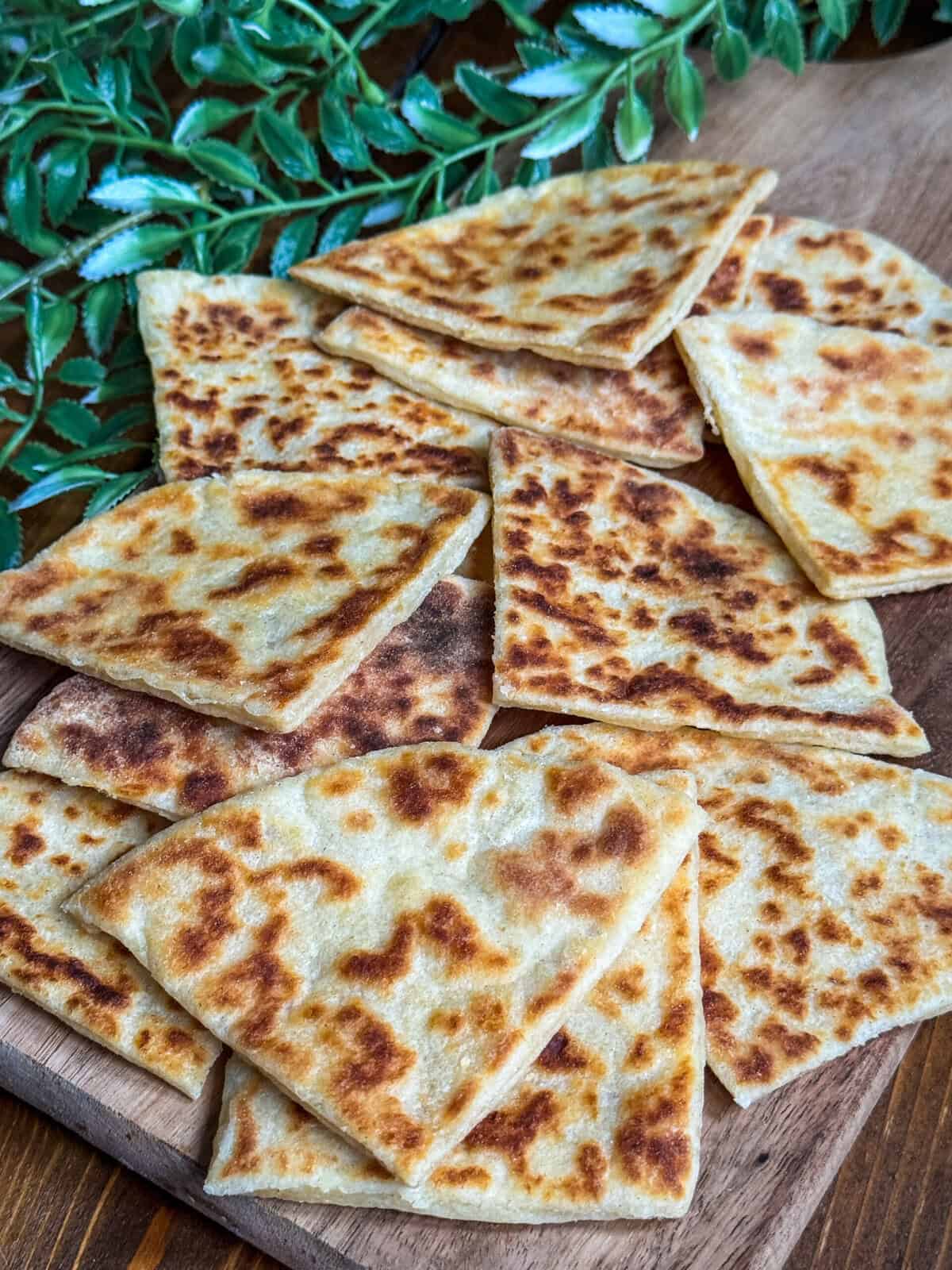
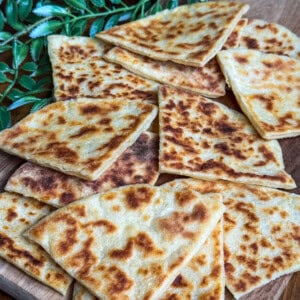
This Scottish Potato Scones Recipe (also known as tattie scones) is soft, warm, and perfectly golden on the outside with a light, fluffy center. Super easy to make, they're perfect for breakfast, snacks, or using up leftover mashed tatties.
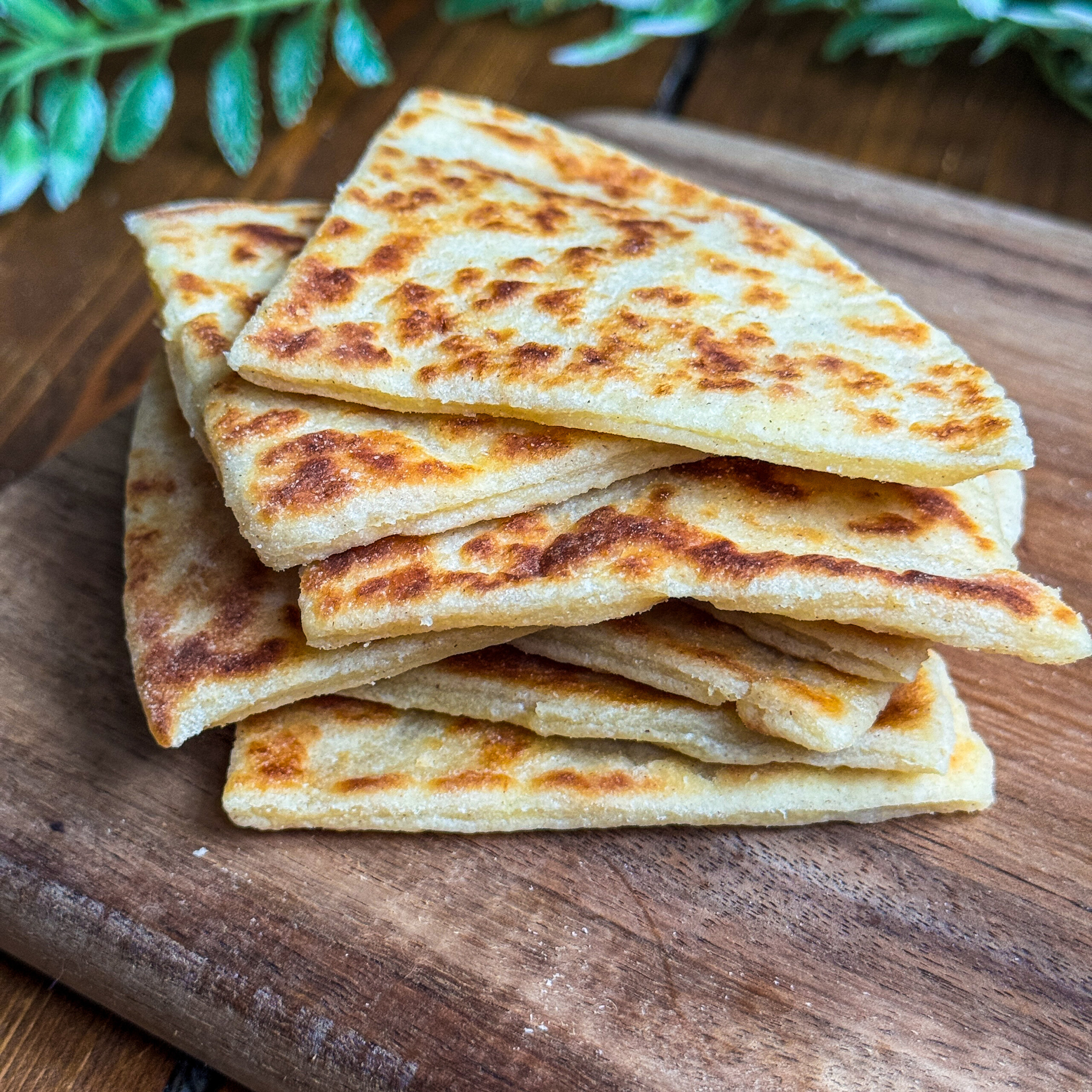
Whether you call them potato scones, tattie scones, potato cakes, farls or fadge, this easy recipe will show you exactly how to make them from scratch or with leftovers. Just don't say I didn't warn you when they all disappear in no time!
Jump to:
Potato Scones: A Scottish Breakfast Institution
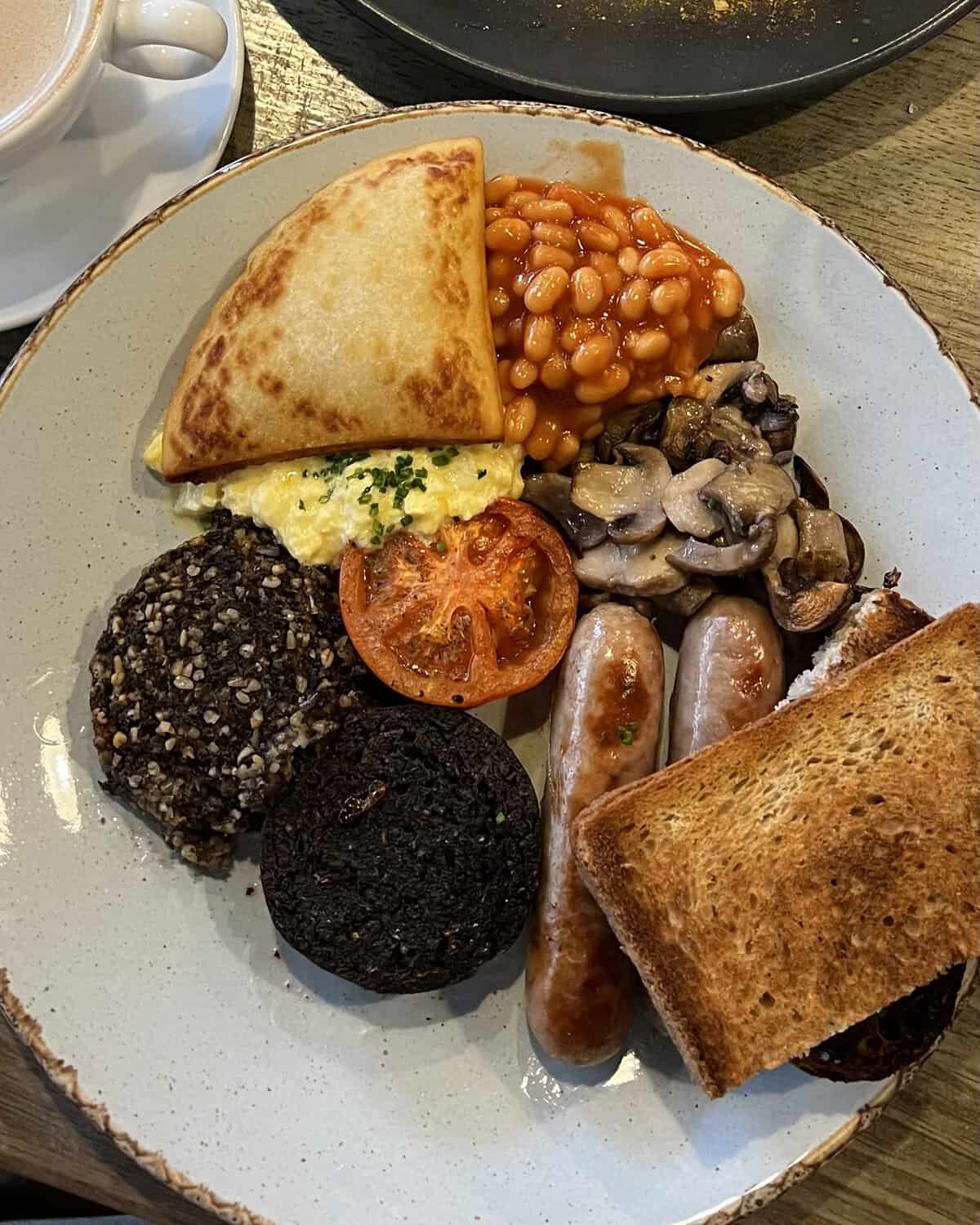
In Scotland, we call them potato scones, and we generally eat them for breakfast. Either on a roll or served as part of a full Scottish breakfast alongside bacon, link sausage, Lorne (square) sausage, black pudding (if you have any leftover you can make my black pudding sausage rolls), haggis, eggs and beans. Or, I love giving them as a tasty snack to my kids too.
Although I’m giving you the recipe from scratch, you can absolutely use whatever leftovers you have. I generally make them whenever I have leftover mashed potatoes from the night before.
Ingredients
Please be sure to scroll down to the recipe card for the complete ingredient list and details.
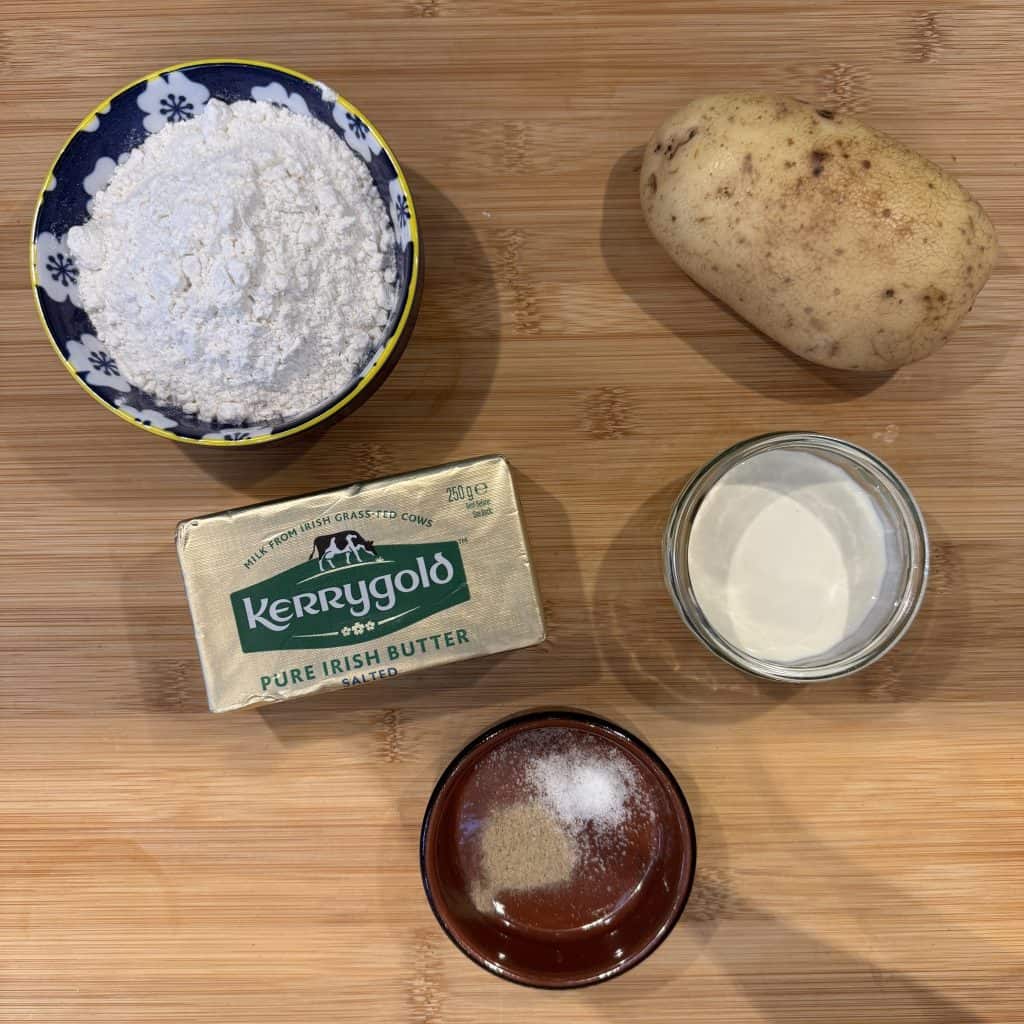
- Potato: I have only used approx. 250g of raw potato (1 peeled potato). Floury potatoes, like Maris Piper, King Edward, or Russet potatoes, are best. Waxy potatoes create a gluey, sticky dough that turns out dense.
- Butter: I’m using Kerrygold salted butter, as I like to season from within. Substitute the full-cream butter for dairy-free or a plant alternative like Flora for dairy-free scones.
- Cream: I use double cream (heavy cream), which is totally optional and not a necessary element, but adds incredible flavour. Omit the cream or use dairy-free cream for plant-based tattie scones.
- Flour: If you don't have self-raising flour, you can use plain (all-purpose) flour and 1 teaspoon baking powder instead. You can substitute the self-rising flour for gluten-free flour and add 1 teaspoon of baking powder if needed.
- Pepper: Using white pepper means your dough doesn't have little flecks of black pepper visible (purely aesthetic). Feel free to substitute black pepper if that's what you have on hand.
- Salt: I reduce the amount of salt included if making these for children.
Note: I filled a large tub with this portion, which meant some went into my freezer too. So, feel free to scale up or down as required, as they do freeze really well!
How To Make Scottish Potato Scones
Peel the potato.
Cook it in salted water until tender. You should be able to slide a knife through it easily.
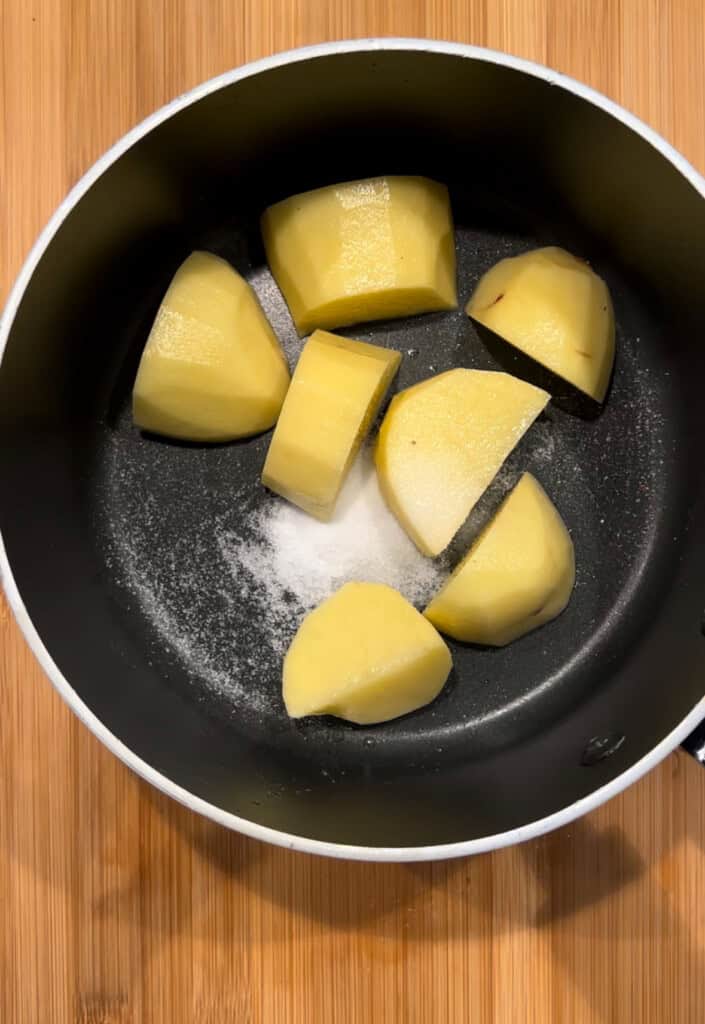
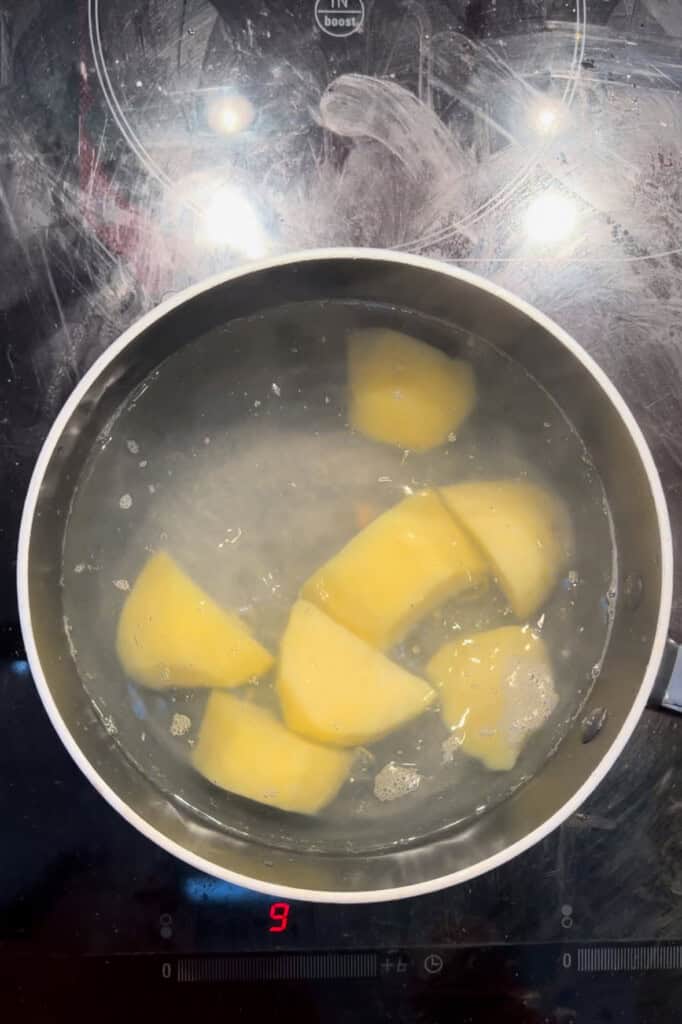
Mash or rice the cooked potato until smooth.
Add salted butter, and stir to combine. Then pour in the double cream.
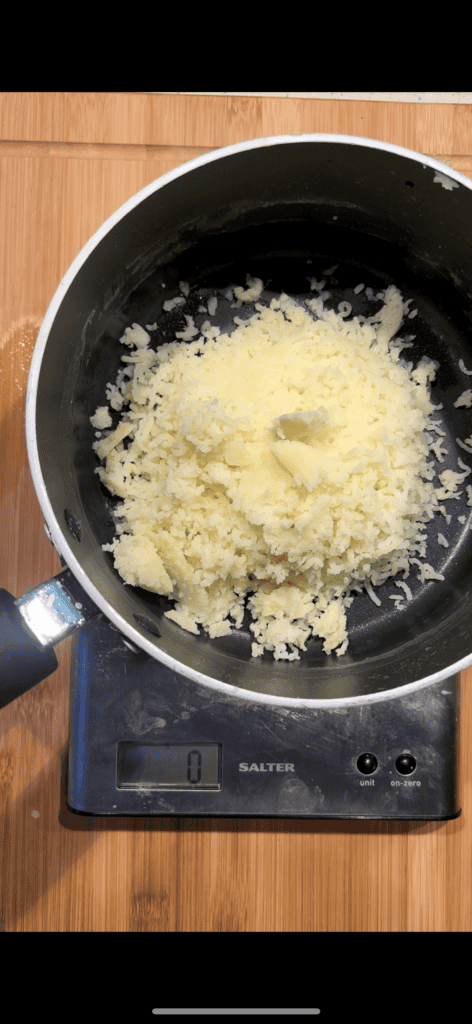
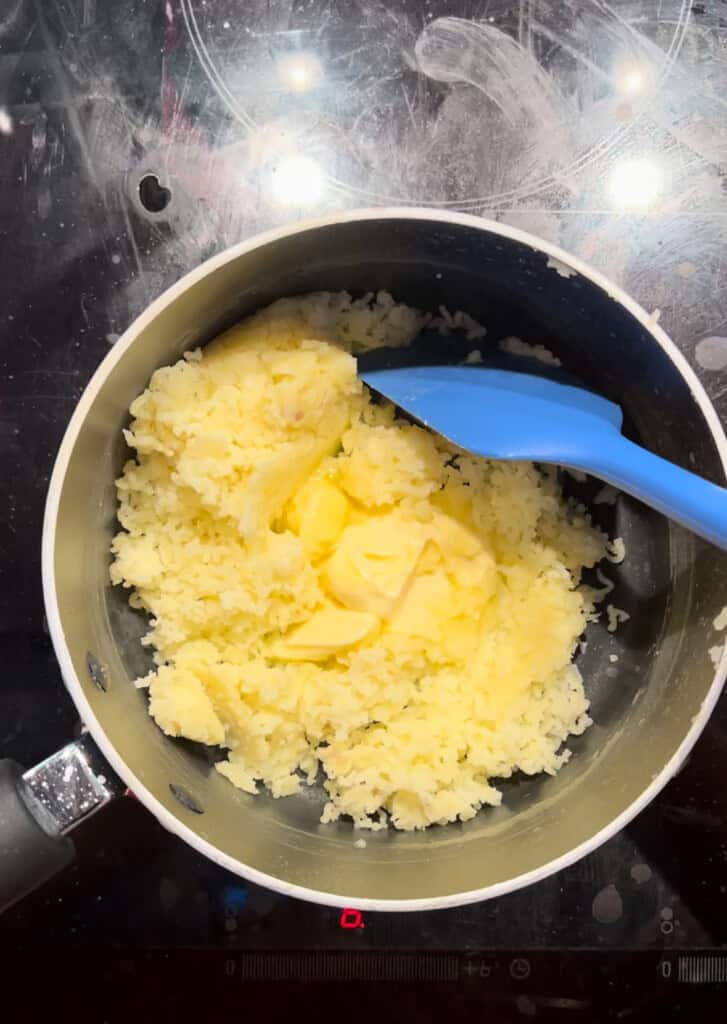
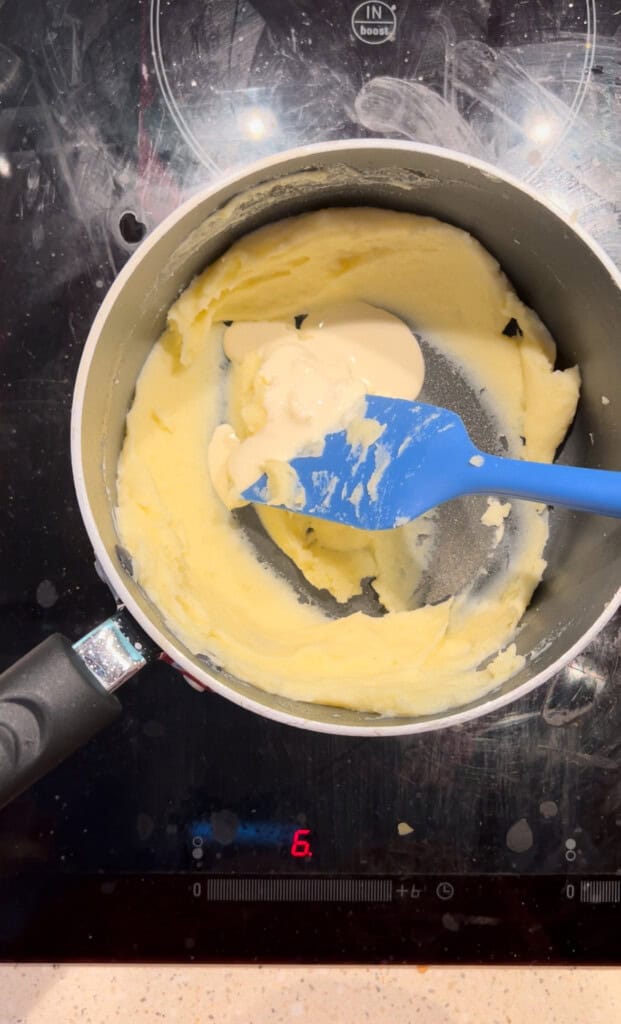
Add the flour and white pepper, and shape the dough into a ball.
Roll the ball of dough on a floured work surface
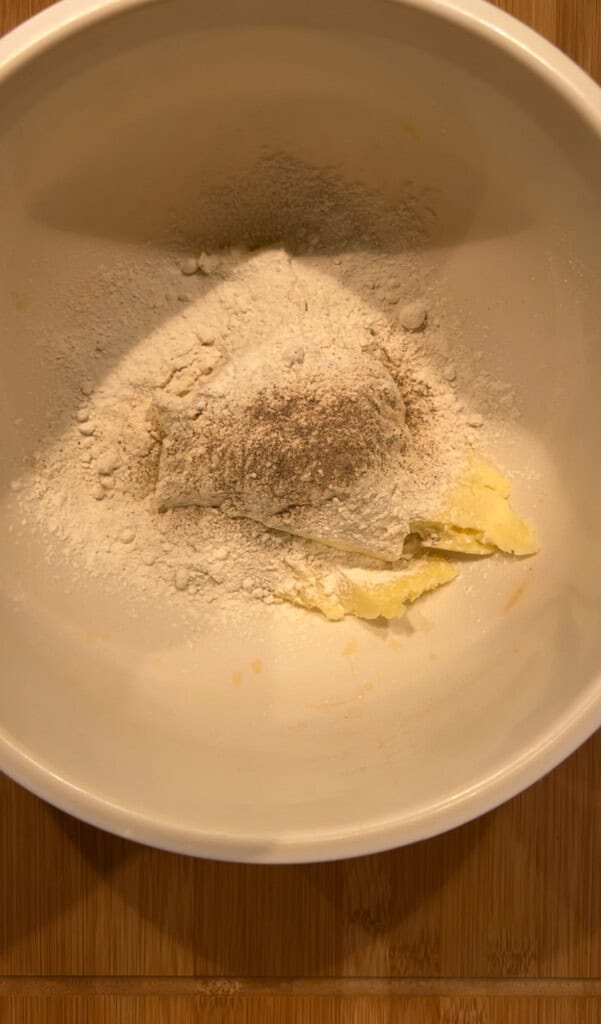
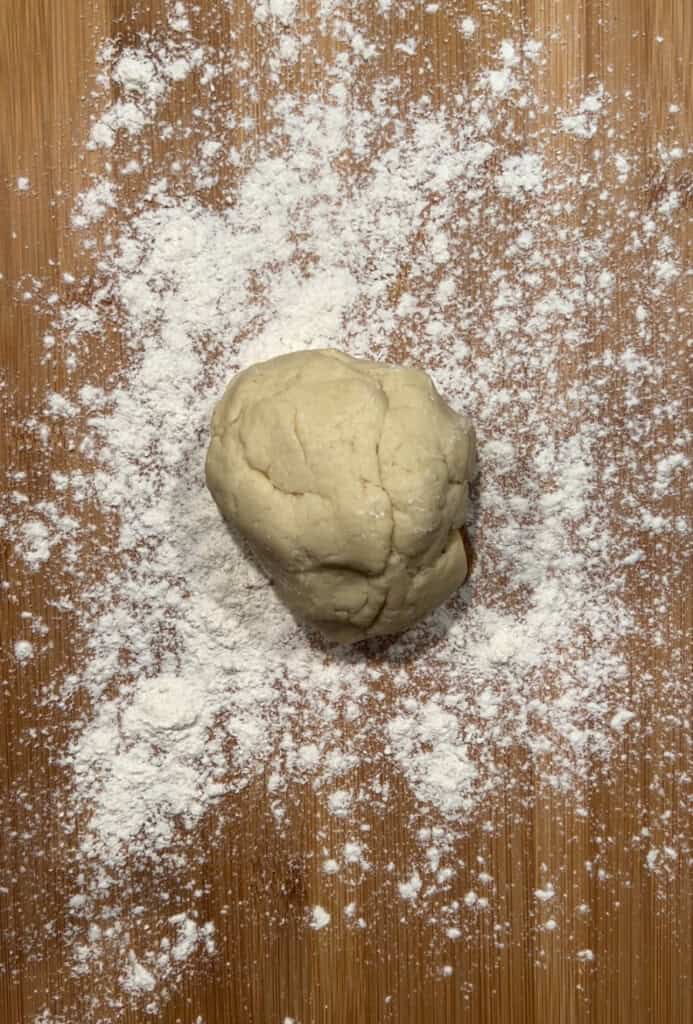
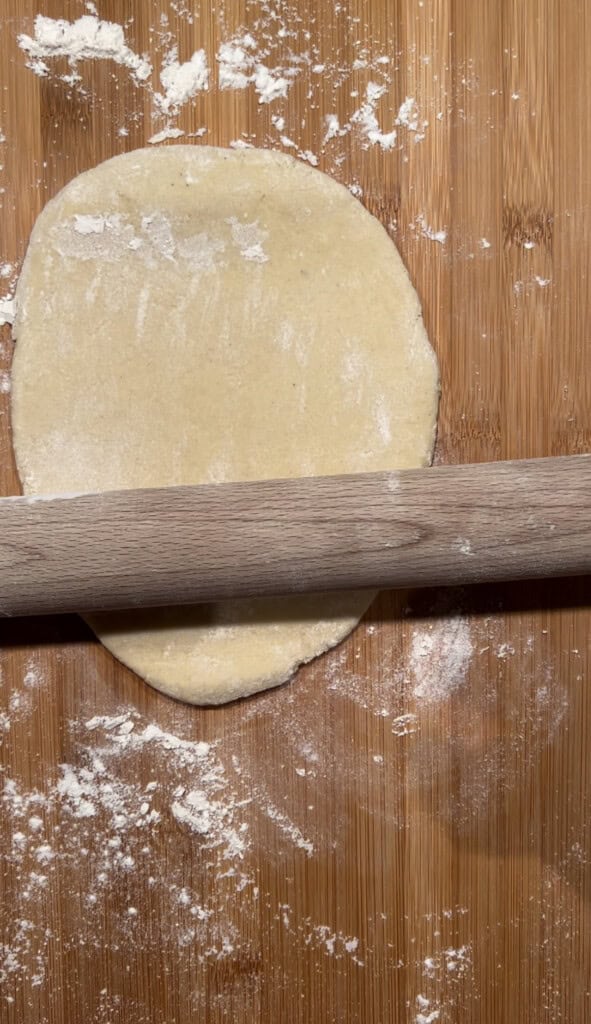
Cut into your desired shape (triangles, squares, etc.)
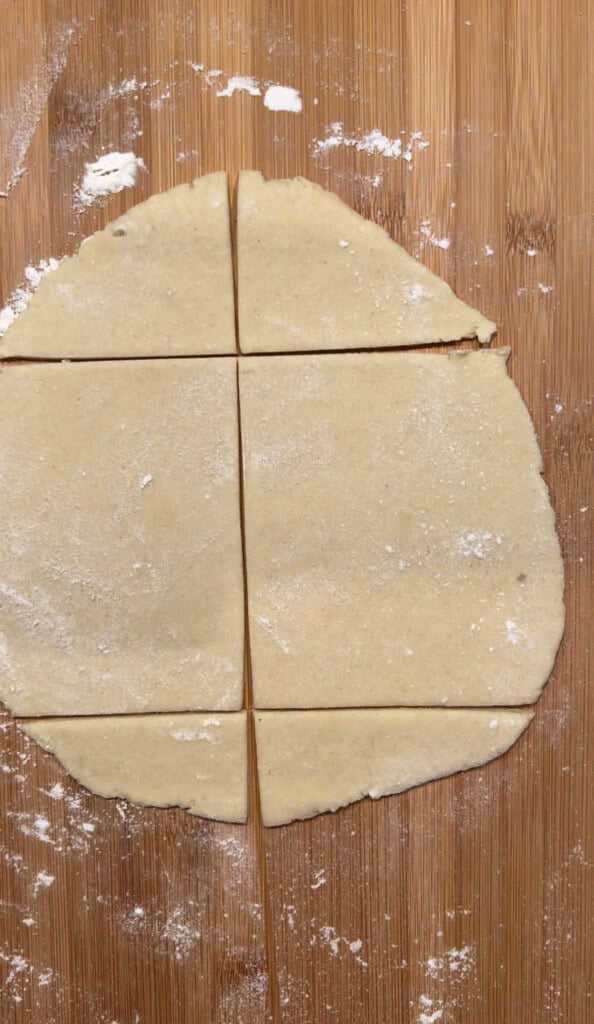
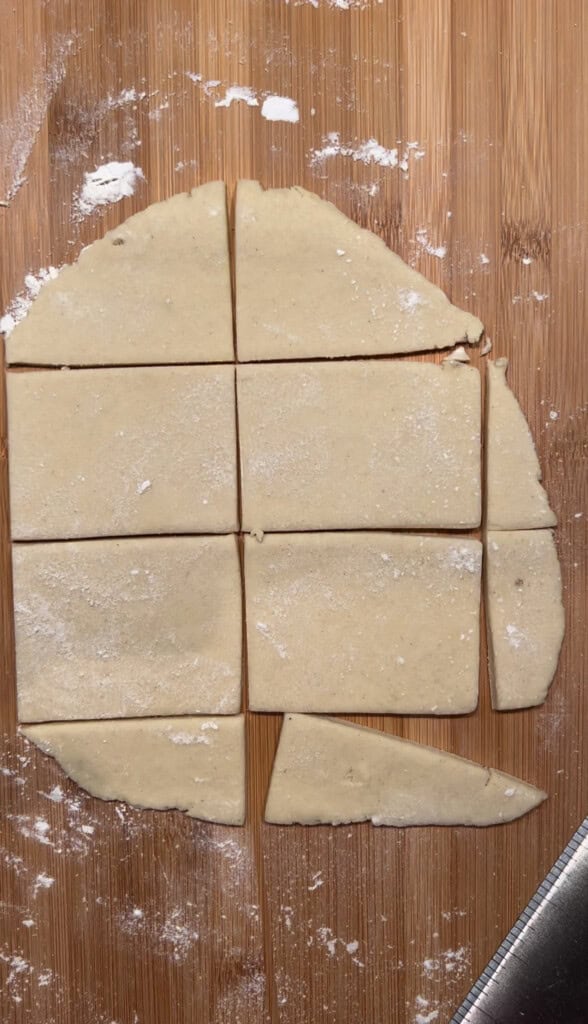
Melt a knob of butter (or olive oil) in a frying pan over medium heat, and wipe off any excess to prevent the scones from becoming soggy.
Fry the tattie scones until they're golden brown on each side.
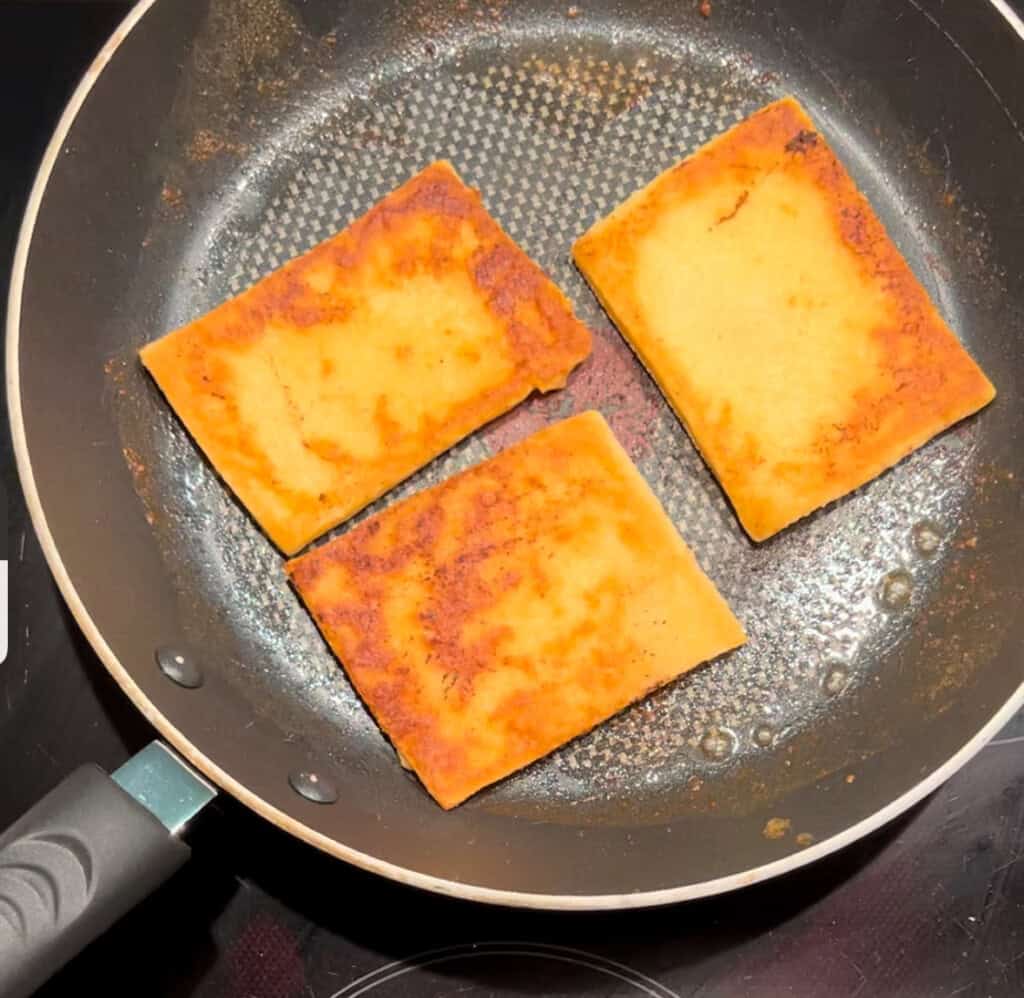
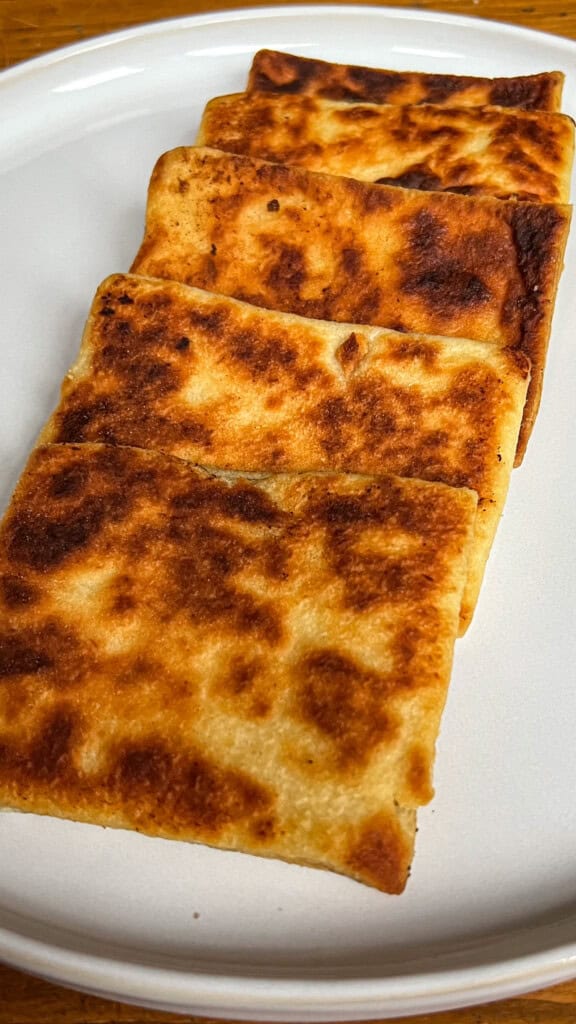
How To Make Potato Scones From Leftover Mash
If using leftover mashed potatoes, a good rule of thumb is a 2:1 ratio:
- 2 parts mashed potato
- 1 part flour
For example:
- 500g mashed potatoes = ~250g flour
- 100g mashed potatoes = ~50g flour
Add a little extra flour if needed. The dough should be soft and fluffy, but not sticky. The measurements aren't exact, so adjust as needed. Watch my video demonstration to view the texture we're going for!
If you're looking for other uses for leftover mashed potatoes - you could serve them alongside Beef Olives, Mince and Dumplings or on top of Cottage Pie.
Video on How To Make Potato Scones

Tips for the Best Potato Scones
- Mash until completely smooth. Any lumps in your mashed tatties will carry through into the dough, so take the time to get them nice and smooth.
- Don’t overwork the dough. Mix just until everything comes together. Similar to fruit scones or even homemade pizza dough, overmixing can make the potato scones tough instead of soft and pillowy.
- Add flour gradually. Especially when using leftover mashed potatoes, the moisture can vary. Add a little at a time until the dough is soft but not sticky.
- Roll evenly. Aim for an even thickness (about ½–¾ inch), so the tattie scones cook at the same rate and don’t burn on the outside before heating through.
- Use medium heat. Cooking too hot will brown the outside too quickly while the inside stays cold. A steady medium heat gives you a perfect golden finish.
Storage and Reheating
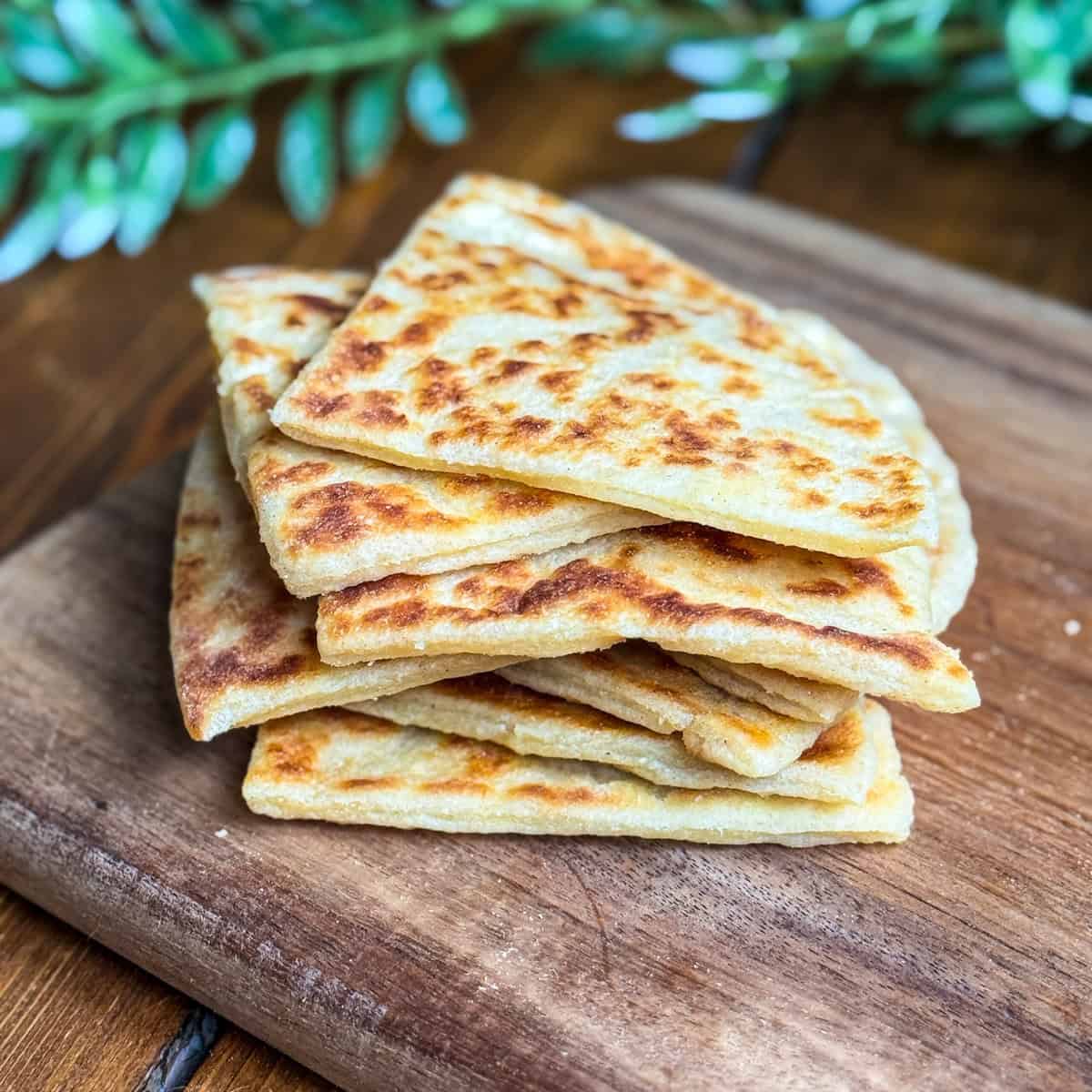
Store cooked potato scones in an airtight container or a freezer bag in the fridge for up to 4 days or in the freezer for up to 3 months. You want to ensure they are fully cooked before freezing, as if you leave the mixture for any period of time without frying, they can go slightly grey-looking.
Then, when you take them out of the freezer and defrost them, just toast them or warm them in a pan or griddle.
Other Scottish Recipes You Might Like
Whether it's your first time trying Scottish Potato Scones, or you're a tattie scone connoisseur, I hope you enjoy them. Then, try some of my other traditional Scottish recipes like:
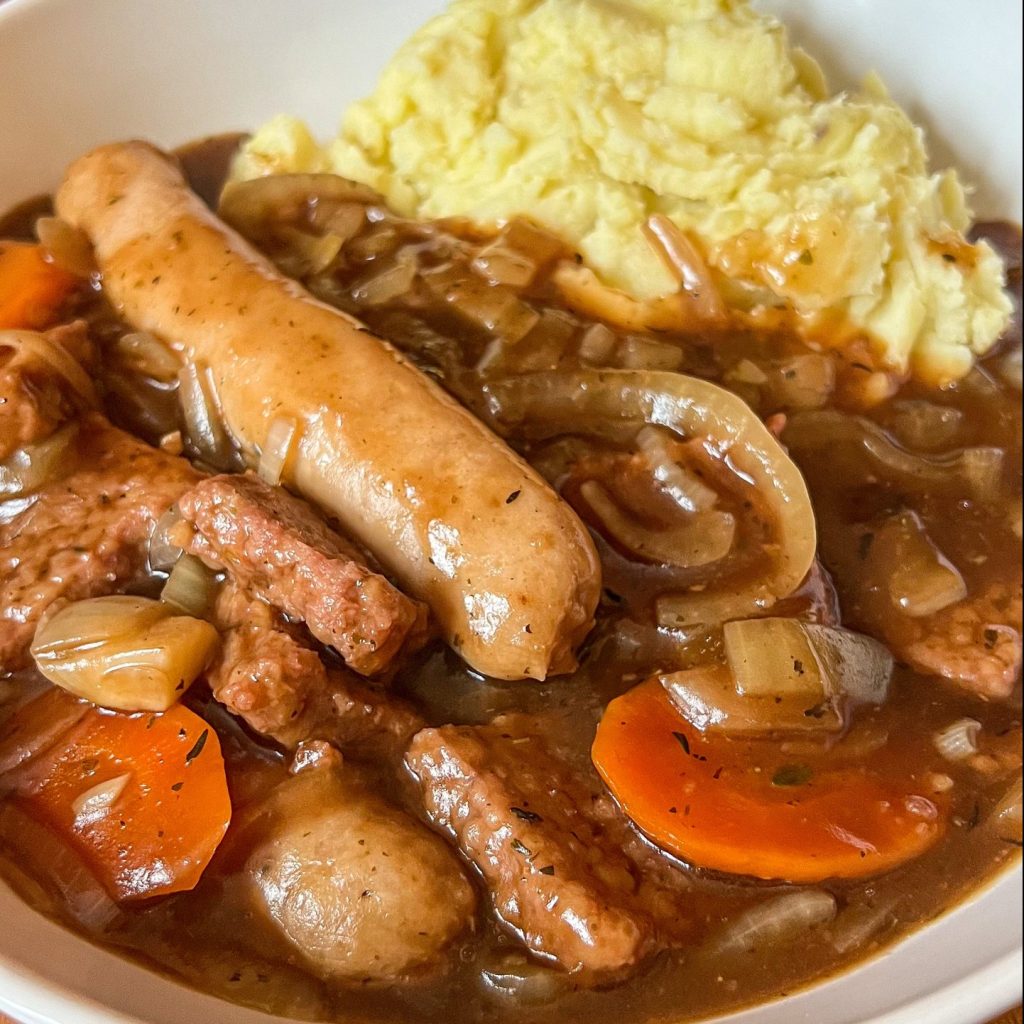
- Stewed Sausages
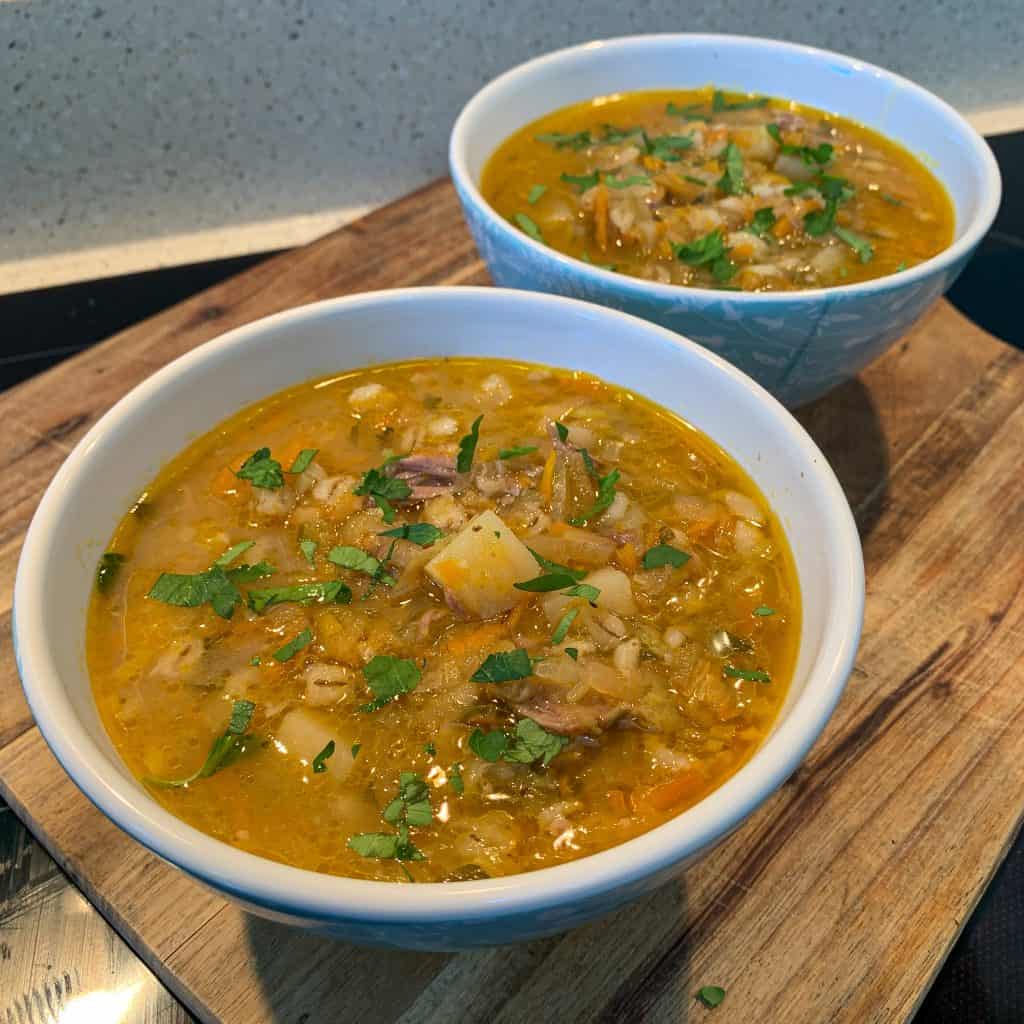
- Scotch Broth
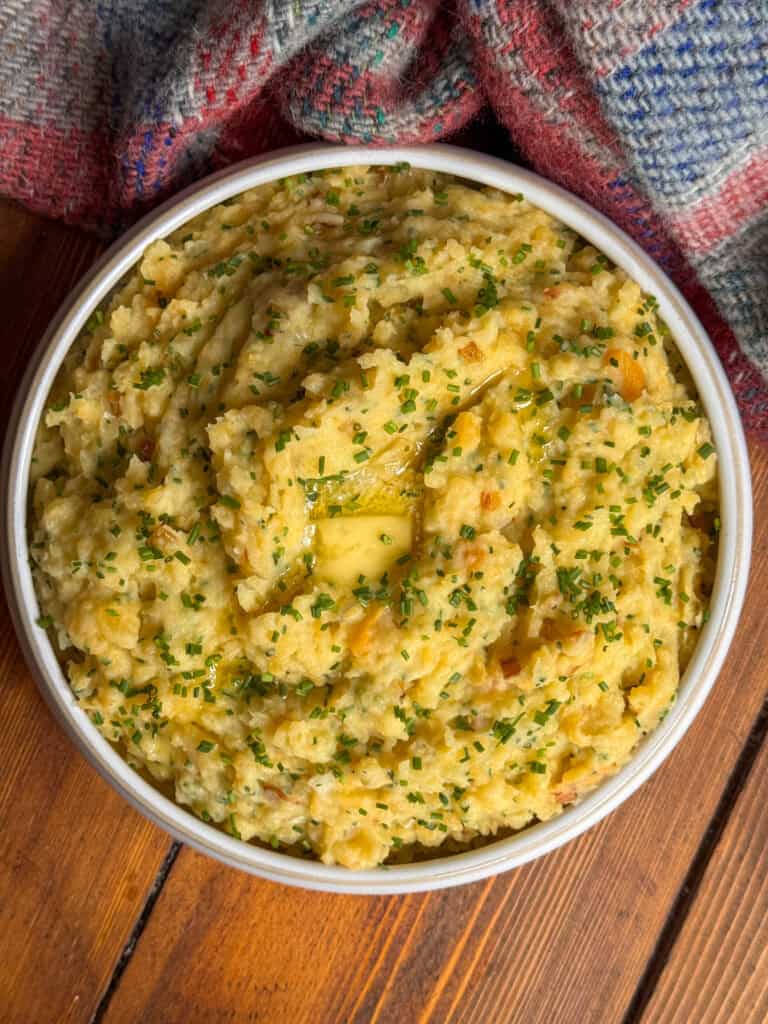
- Clapshot (Orcadian Potato and Rutabaga Mash)
If you have any questions please leave a comment and I'll get back to you. Or I would really appreciate it if you left me a review below.
CRAVING MORE? Subscribe to my newsletter and follow along on Instagram, Tik Tok and YouTube for the latest updates.
Scottish Potato Scones (Tattie Scones)

Ingredients
- 270 g raw potato unpeeled weight - See Notes if using Leftover Mashed Potatoes
- 50 g salted butter
- 30 ml double cream optional
- 135 g self raising flour plus more for dusting and shaping
- salt and white pepper
Instructions
- Peel 270 g raw potato and cook in salted water until soft (knife tender)
- Mash (or rice) cooked potato, then add 50 g salted butter and 30 ml double cream - stir through to throughly combine
- Mix through 135 g self raising flour and salt and white pepper using your hands, and form into a ball of dough
- Roll out ball of dough on a floured surface and cut into desired shape, approx. ¾mm thick
- Fry in a knob of butter (ideally wipe off the excess with kitchen paper before cooking) or dry fry on a good non-stick pan on medium heat – approximately 4 minutes on each side until golden brown
Notes
- 2 parts mashed potato
- 1 part flour
- 500g mashed potatoes = ~250g flour
- 100g mashed potatoes = ~50g flour
- Potato: I have only used approx. 250g of raw potato (1 peeled potato). Floury potatoes, like Maris Piper, King Edward, or Russet potatoes, are best. Waxy potatoes create a gluey, sticky dough that turns out dense.
- Butter: substitute the full-cream butter for dairy-free or a plant alternative like Flora for dairy-free scones.
- Cream: I use double cream (heavy cream), which is totally optional and not a necessary element, but adds incredible flavour. Omit the cream or use dairy-free cream for plant-based tattie scones.
- Flour: If you don't have self-raising flour, you can use plain (all-purpose) flour and 1 teaspoon baking powder instead. You can substitute the self-rising flour for gluten-free flour and add 1 teaspoon of baking powder if needed.
- Pepper: Using white pepper means your dough doesn't have little flecks of black pepper visible (purely aesthetic). Feel free to substitute black pepper if that's what you have on hand.
- Salt: I reduce the amount of salt included if making these for children.


Alison Robertson says
Made these for my little girls and they loved them! Had to sub in plant butter as one of my girls has dairy allergy and still worked well. Will be making with proper butter for myself soon! 😂
Lauren says
Thanks so much, so glad your girls loved them!
Tegan says
Delicious! Best potato scone recipe I've tried. Thank you for sharing this recipe! 😋
Lauren says
thanks so much for your comment, it's appreciated!
Marie says
So glad I found this recipe from Lauren as I live in Ireland and the tattie scones are nothing like the Scottish ones I was brought up with, however these are exactly like the real McCoy, have made them several times now, so thanks for sharing your amazing recipes always...
Jill Mackenzie says
Such an easy and perfect recipe for all the family to enjoy.