
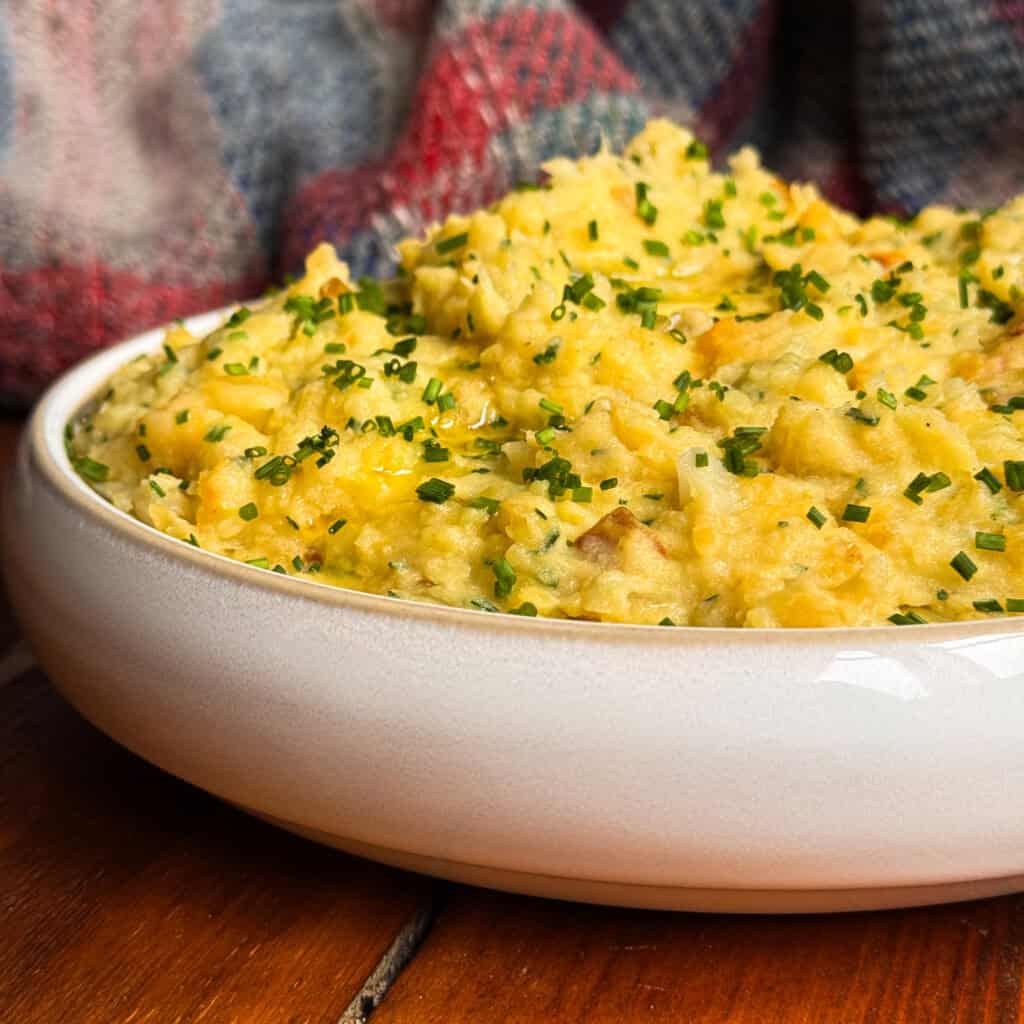
Clapshot is a traditional Scottish dish made with mashed tatties (potatoes), swede, and fresh chives. My version’s got beef dripping and onions through it for extra flavour, and it’s the perfect one-pot side for haggis, mince and more!
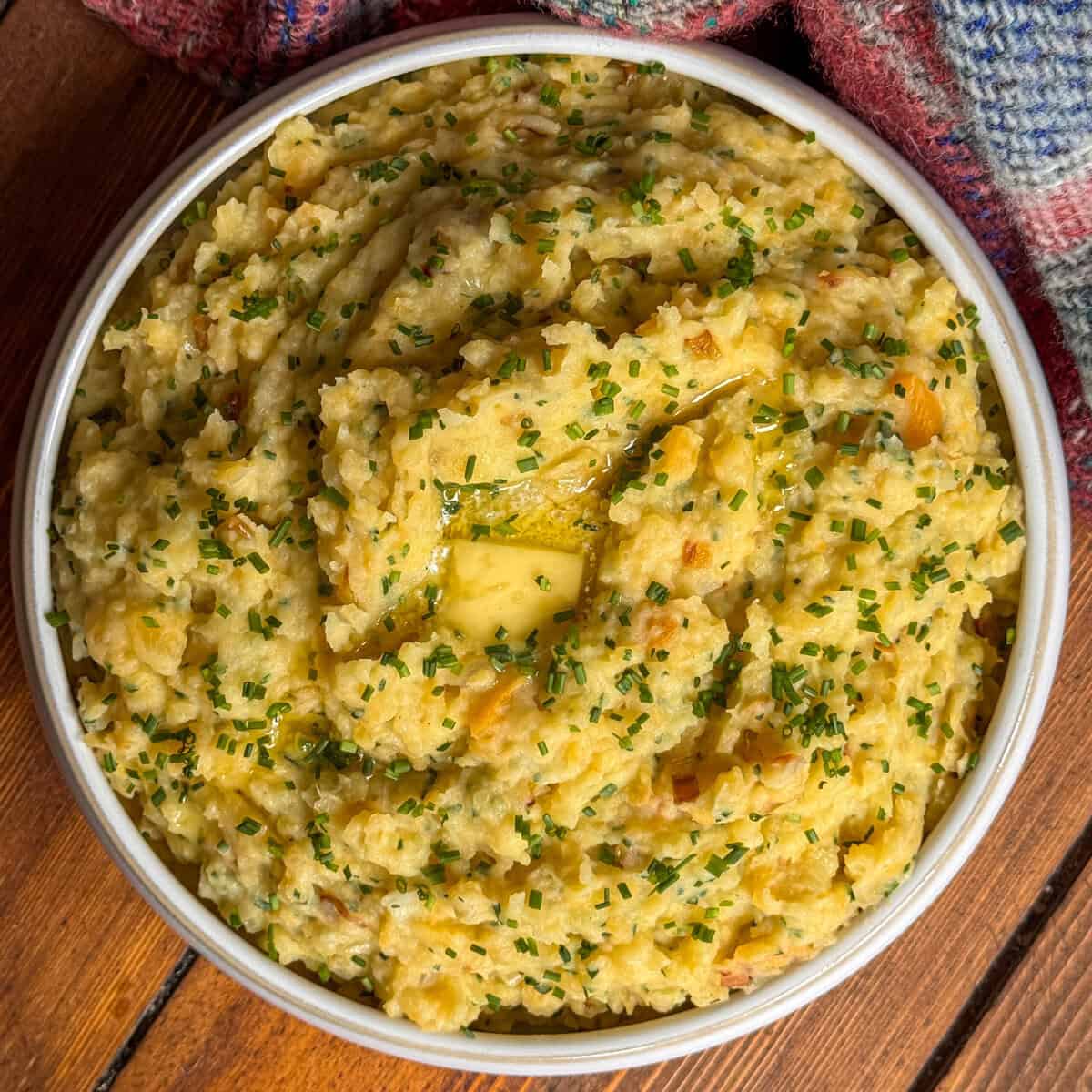
You won’t find Clapshot on too many Scottish menus anymore, which is a shame, because it’s delicious. Any dish requiring mashed tatties is elevated when you add all the tasty extras included within this classic Scottish recipe.
What Is Clapshot?
Clapshot comes from the Orkney Islands and is a proper Scottish classic. It’s made by mashing tatties and swede (often called neeps in the North East of Scotland, but also known as turnip or rutabaga) with butter, salt, and pepper.
It’s a dish that dates back generations. Born out of the need for hearty, filling food using ingredients that could be grown locally and stored through the long, cold and harsh Scottish island winters.
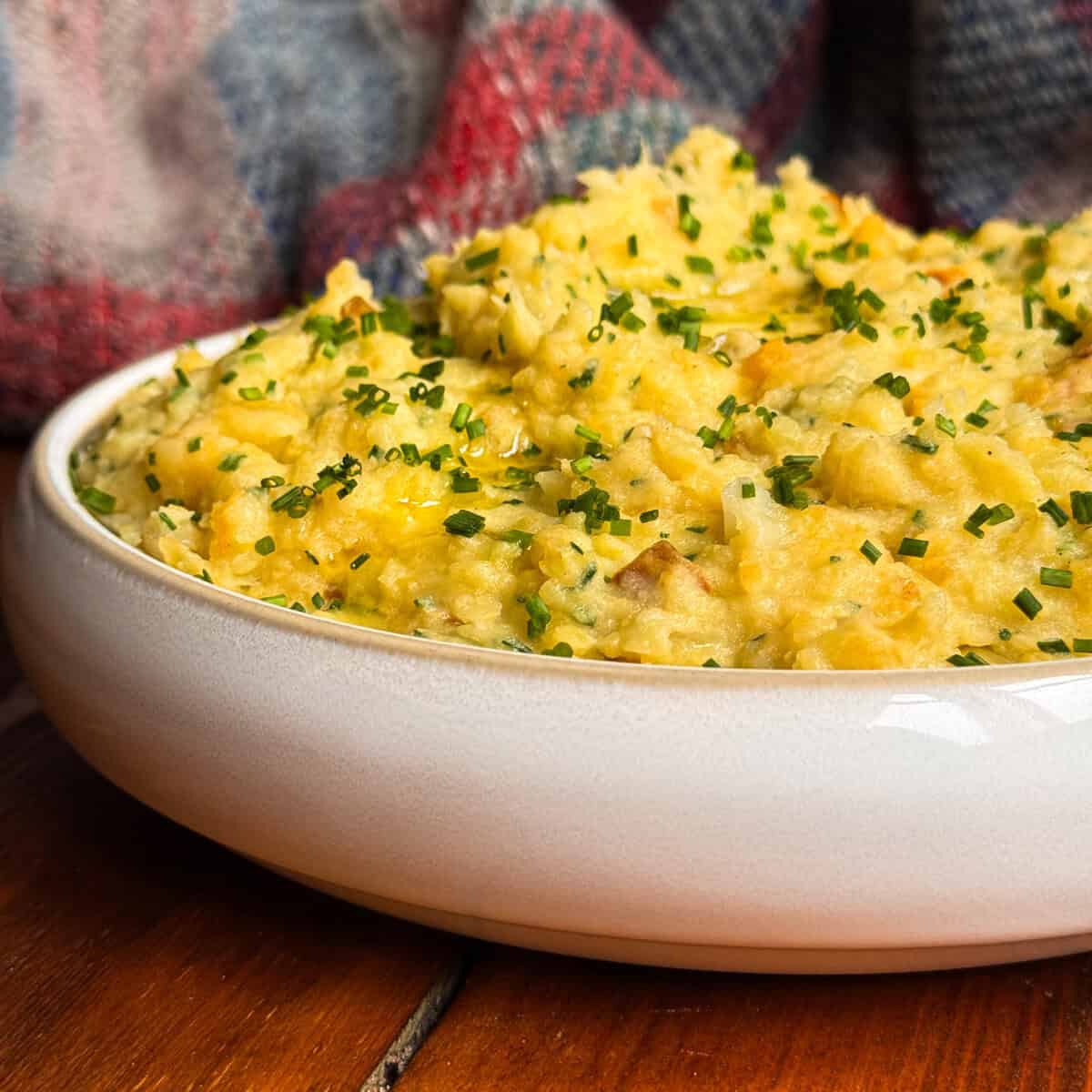
Us Scots try to be as straight forward (and simple) as possible; so it’s highly likely that the dish was named after the sound that you hear when making it; neeps are a hardier vegetable so more effort is required when mashing.
You end up making a significant banging sounds, like a ‘clap’ of thunder or a ‘shot’ from a weapon, when hitting your masher off the pot. There is also a nod to the old Scots word “clap,” meaning to mash or pat down.
Ingredients and Notes
Please be sure to scroll down to the recipe card for the complete ingredient list and details.
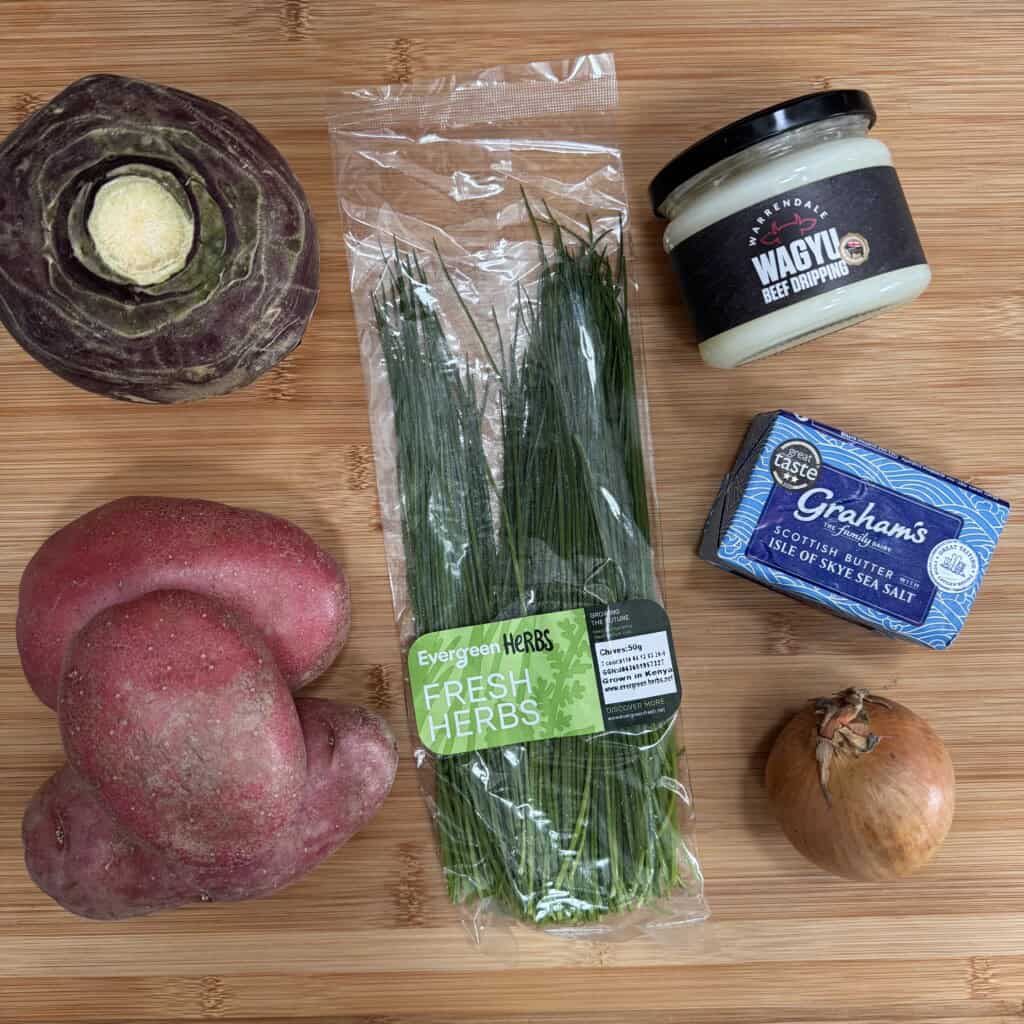
- Beef Dripping: Traditional in Scottish clapshot, this adds rich, savoury flavour and lots of depth to the mash. If you don’t have any, you can swap in butter or a neutral oil, but the flavour will be a wee bit lighter.
- Veg: This recipe uses tatties and swede (also known as turnip or neeps). The tatties give you a creamy, fluffy base, while the swede brings a subtle sweetness and earthy flavour. Maris Piper or red potatoes work best, but any floury tattie will do the job.
- Butter: Salted butter adds richness and creates the classic creamy finish you expect in a good clapshot recipe. I use Kerrygold, but any brand will work.
Possible Clapshot Recipe Variations
- Make it vegetarian. Skip the beef dripping, and cook the onions in butter or olive oil instead. You’ll still get plenty of flavour while keeping the dish completely vegetarian.
- Add spring onions. Swap or combine the chives with finely sliced spring onions (green onions) for a slightly stronger, fresh onion flavour throughout the mash. This was my Mum's signature Clapshot addition - she loved it!
- Make extra creamy clapshot. Stir in a splash of warm milk or cream along with the butter for an even smoother, richer texture.
- Include cheese. Stir in a handful of grated cheddar while mashing for a richer, more indulgent version that pairs especially well with sausages, like my honey and mustard sausages, or roast meat.
- Chunky style. If you like a bit more texture, give the dish a light mash rather than making it completely smooth for a more rustic feel.
How to Make a Traditional Scottish Clapshot Recipe
Melt the beef dripping in a large pot
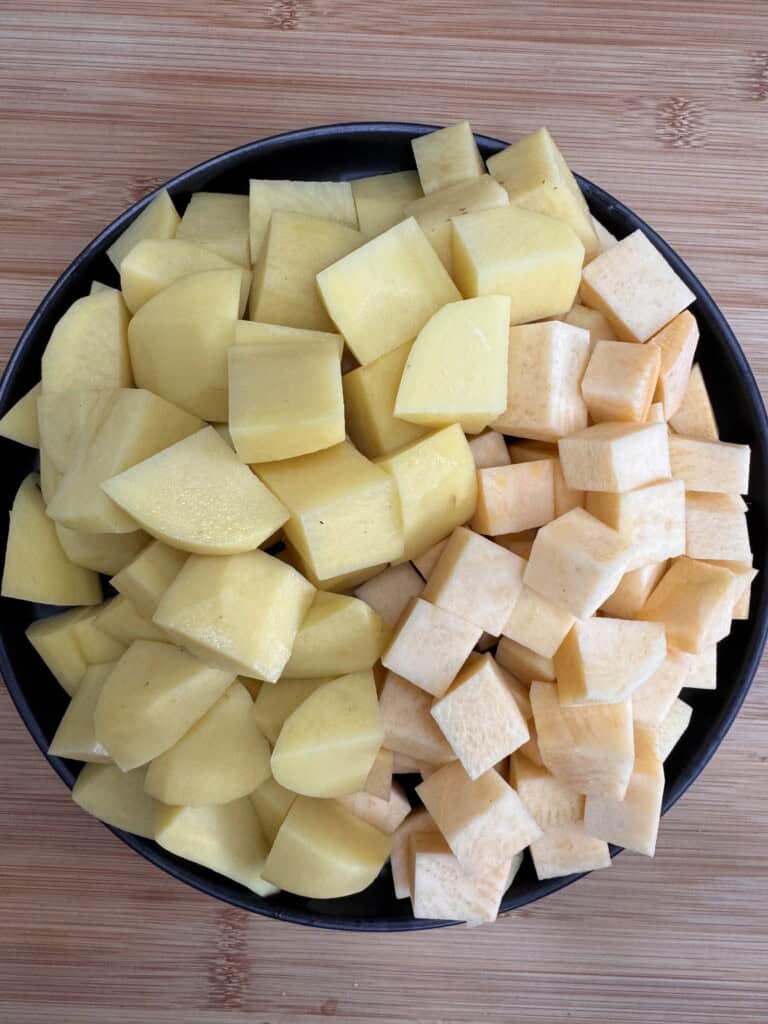
Prepare vegetables by peeling and chopping into chunks.
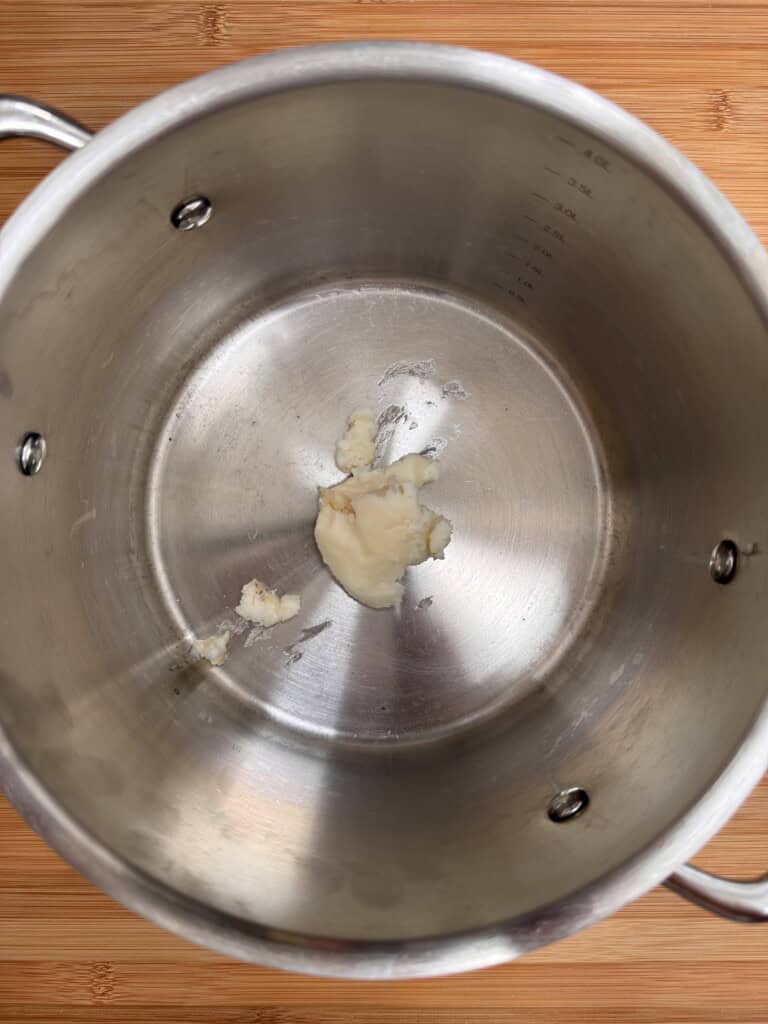
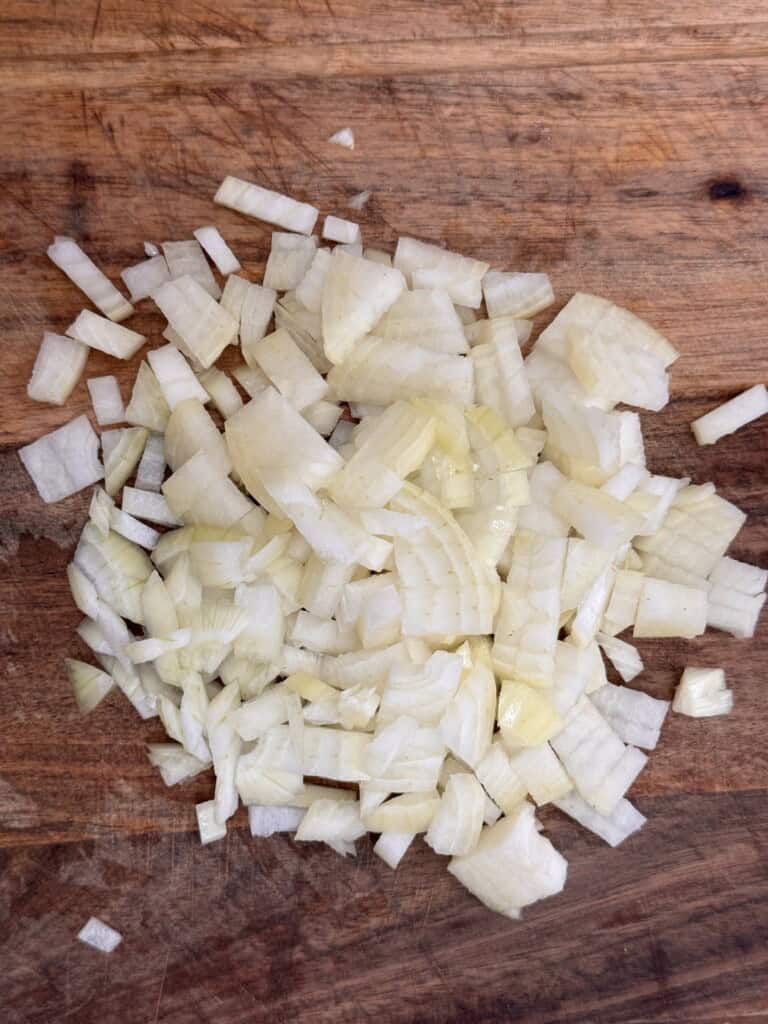
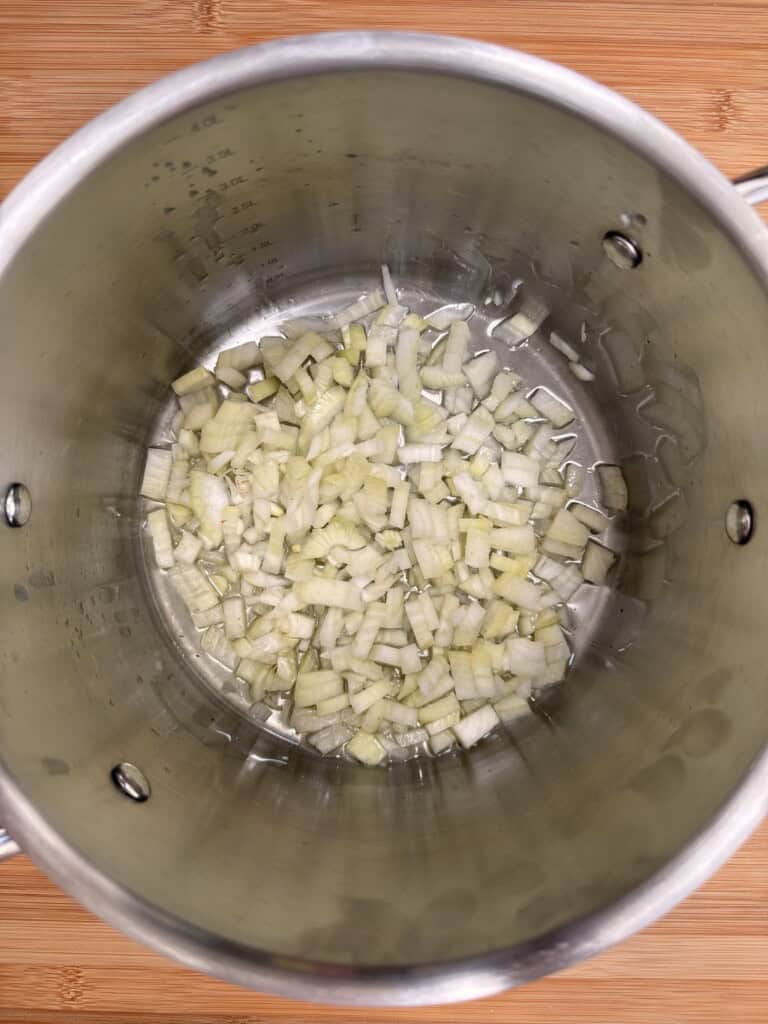
Soften the peeled and chopped onions in the beef dripping just until they start to turn golden.
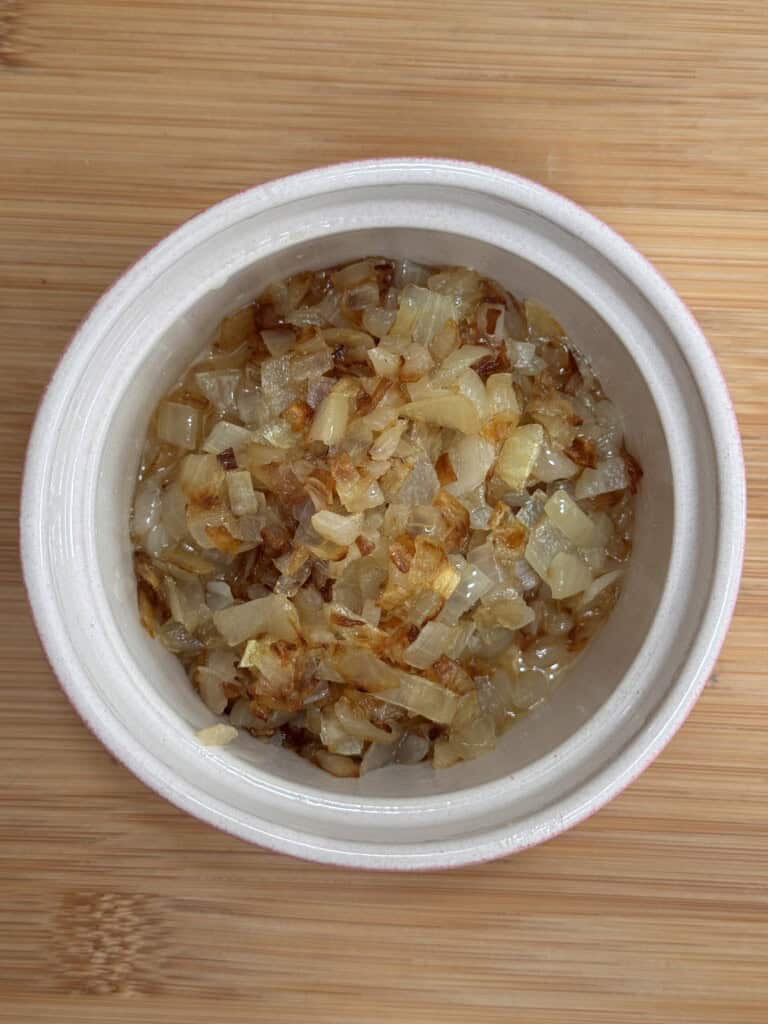
Transfer the beef dripping and onions to a ramekin.
Add the peeled and chopped swede (turnip) and potatoes to the pot, along with a generous pinch of salt. Fill the pot with cold water, and boil until the veggies are fork-tender.
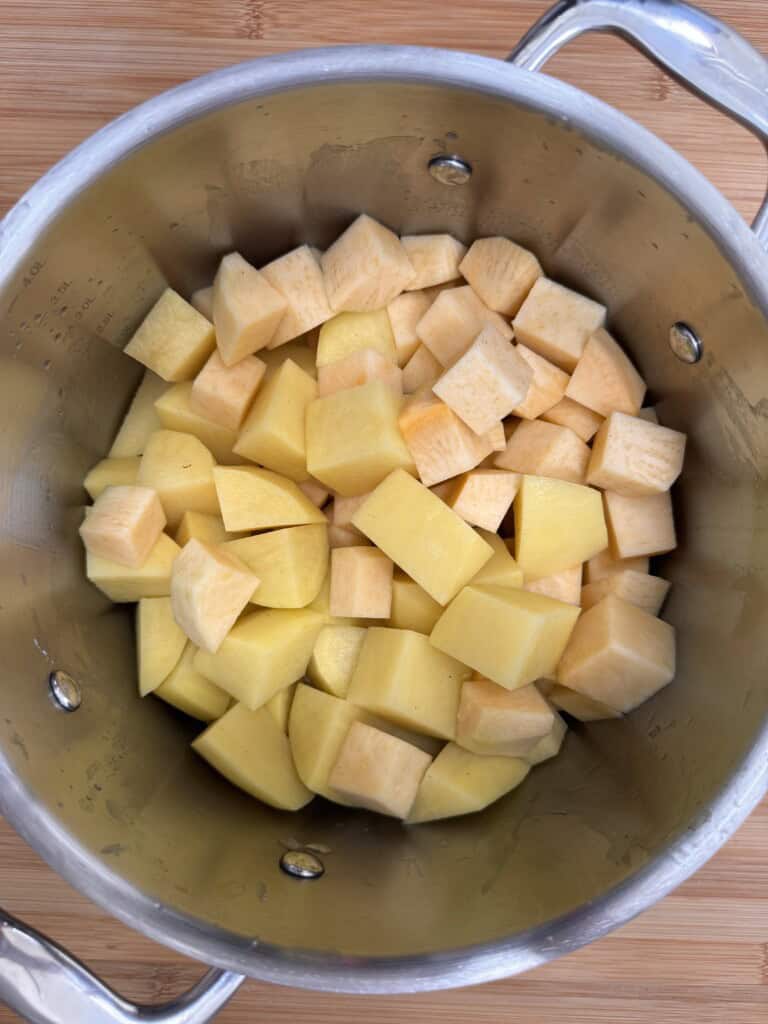
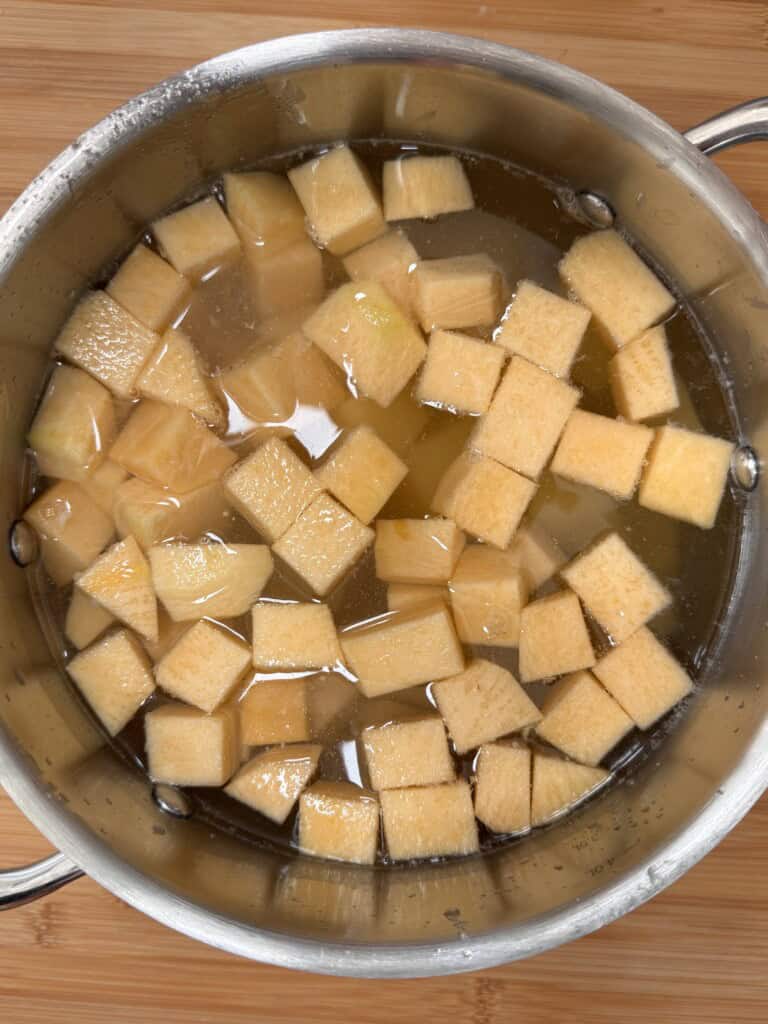
Drain the water then add salted butter and chopped chives to the pot
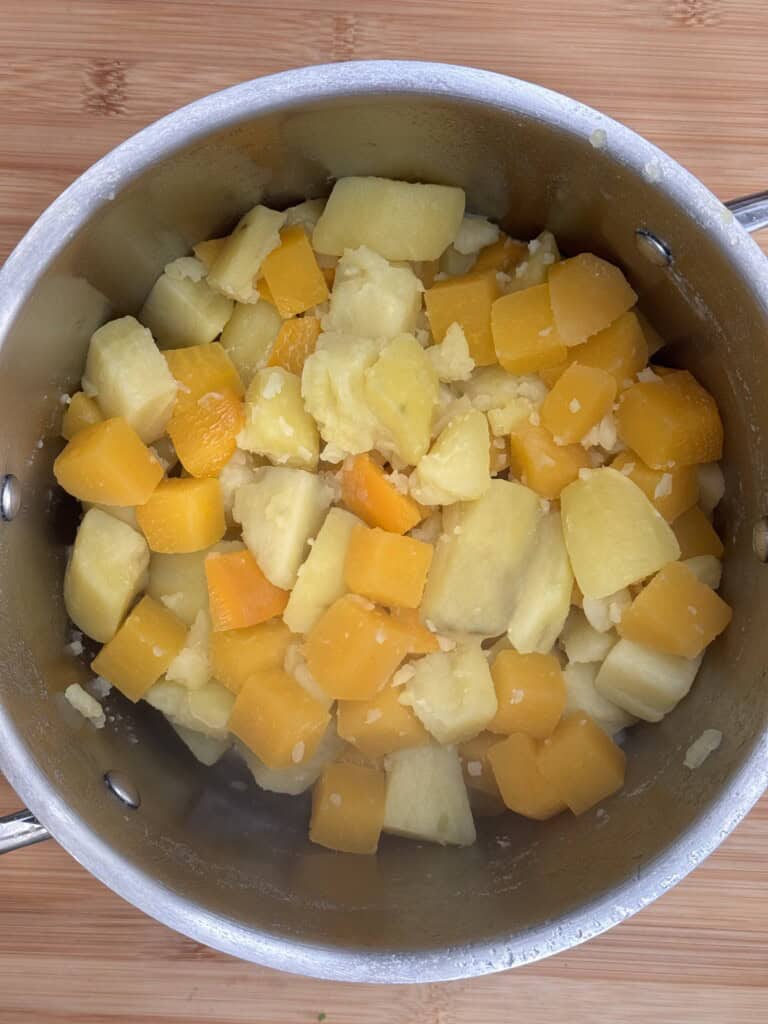
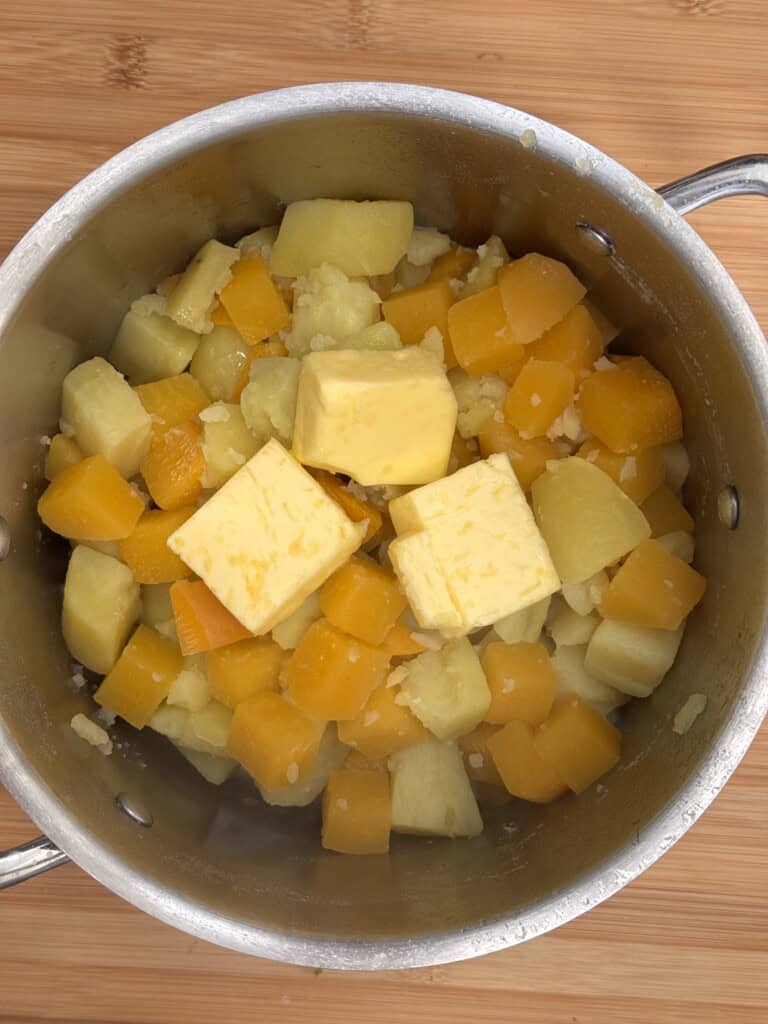
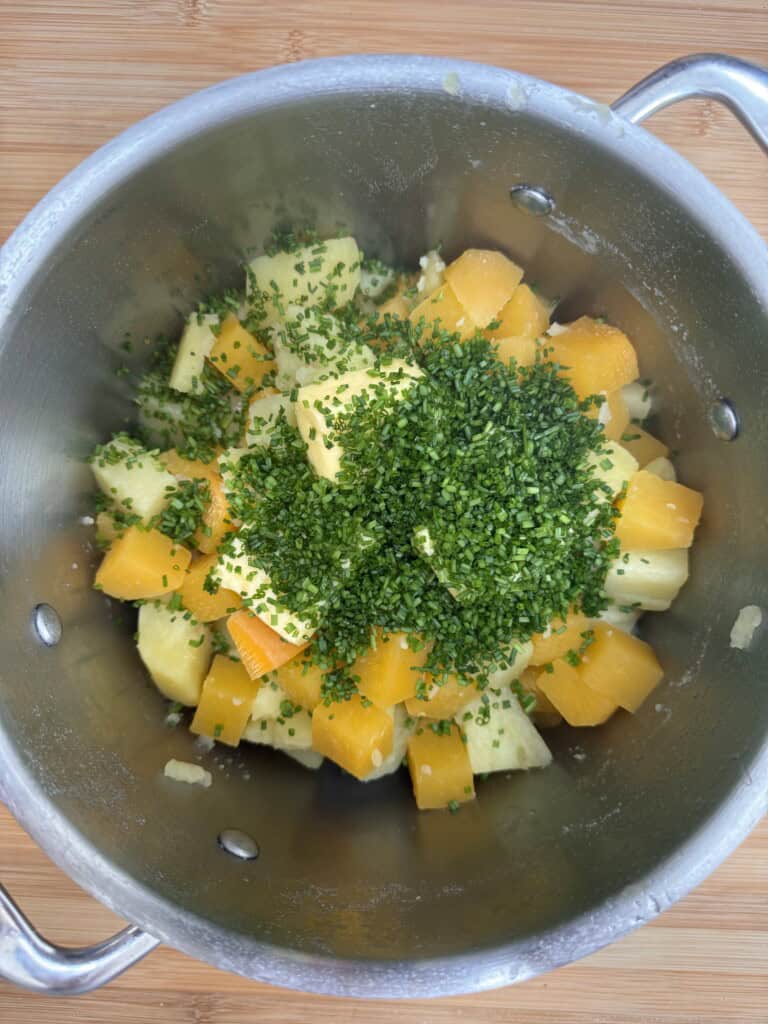
Mash to combine then add the cooked onions and beef dripping into the mash and stir through. Season with salt and white pepper to taste.
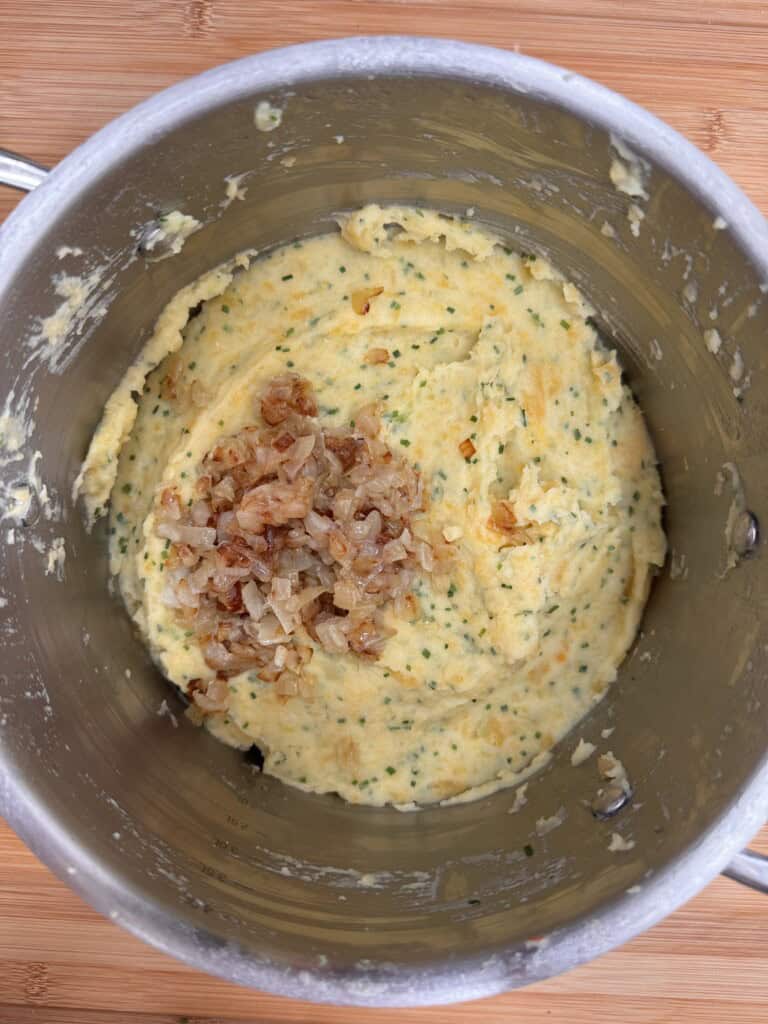
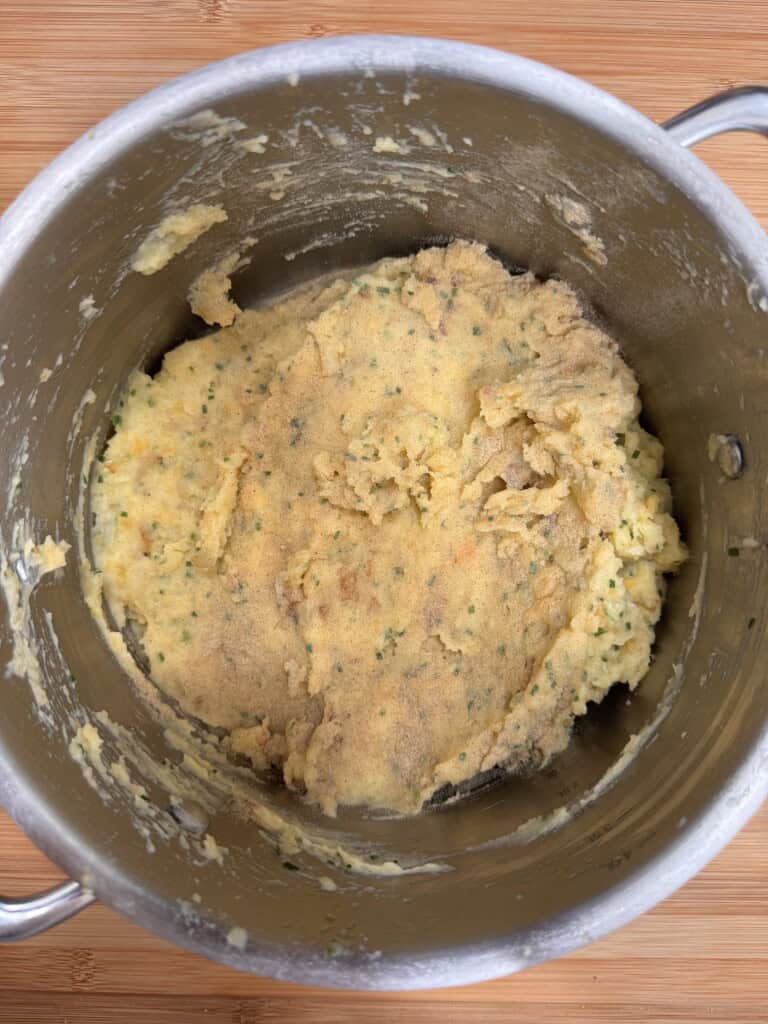
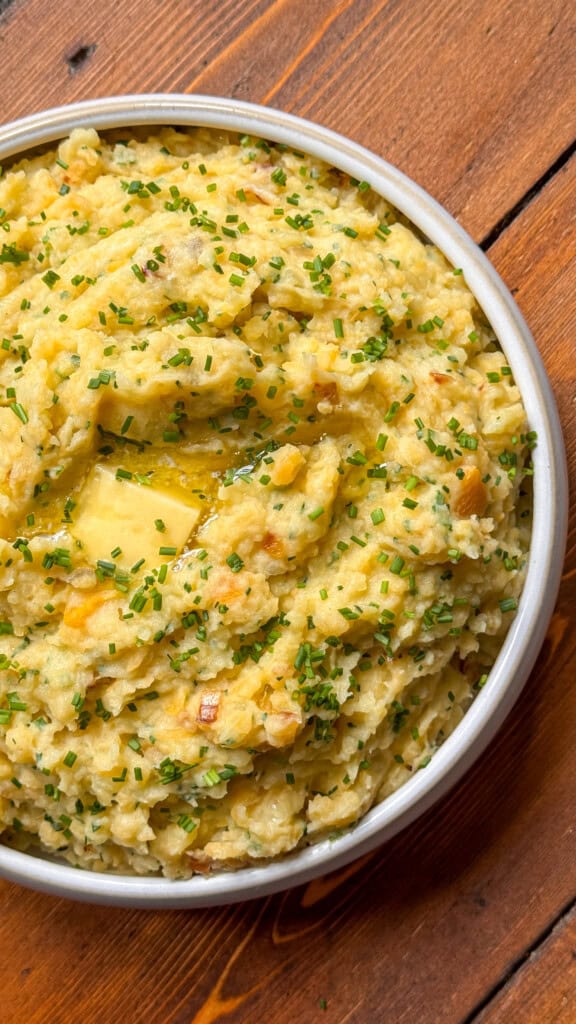
Serve warm with extra butter and extra chopped chives for garnish!
Video on How To Make Clapshot
How To Serve Clapshot
Growing up, I loved it served alongside:
- haggis
- Scottish stewed sausages
- beef olives
- or a good Sunday roast
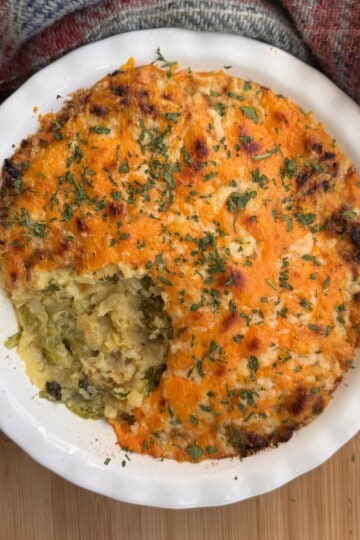
These days, it’s a staple at my table and I often serve it as mince and tatties or cottage pie; swapping the tatties (mashed potatoes) for clapshot to sneak in a little extra veg. It’s often served around traditional Scottish holidays like Hogmanay or Burns Night.
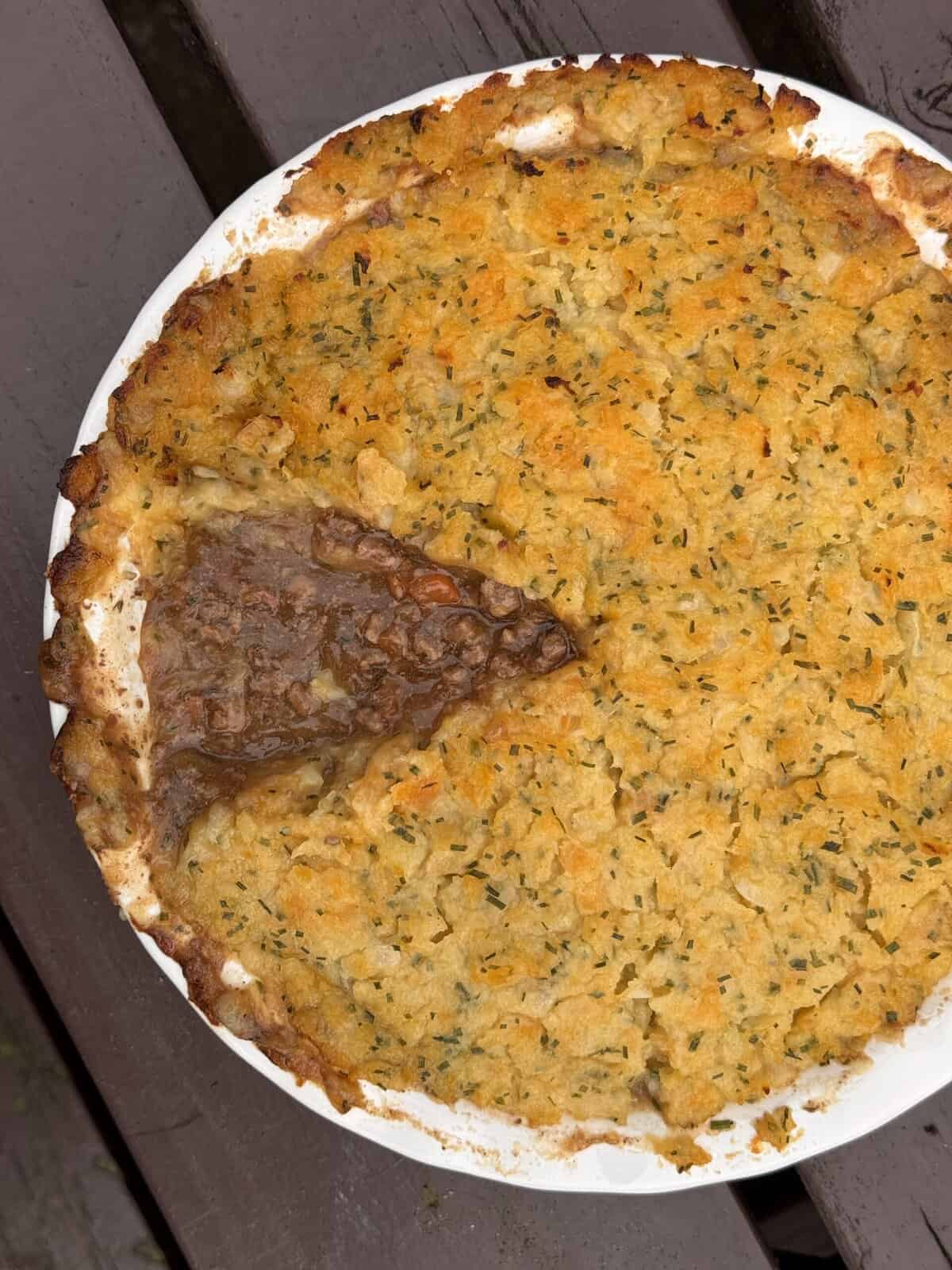
The above photo is a traditional Scottish mince base with clapshot topping. I love it because it's so easy to make, uses simple ingredients and elevates a dish containing simple mash to something much more delicious!
My Top Tips & Tricks
- Cut the swede smaller than the potatoes. Swede takes longer to cook than potatoes, so cutting it into slightly smaller chunks helps everything soften at the same rate.
- Start with cold, salted water. Always add your potatoes and swede to cold water. Then bring it to a boil. This ensures even cooking and better texture. Something my Gran always taught me: “vegetables that grow in the ground start off in cold water and veg that grows above the ground start off in boiling water”.
- Avoid overcooking. Boil the veg just until it’s fork-tender. Overcooking can make the mash watery and affect the final texture.
- Warm the butter. Using softened or slightly warmed butter helps it melt evenly into the mash, giving you a smoother, creamier result. But also speeds up the process if your potatoes and swede have already cooled slightly.
- Don’t overmix. Mash your clapshot just until the ingredients are combined. Overworking the potatoes can make them gluey instead of light and fluffy.
How To Store and Reheat
Transfer cooled clapshot to an airtight container and store it in the refrigerator for 3-4 days. To reheat, warm the mash gently on the hob over medium heat or in the microwave, adding a splash of milk or a little extra butter to bring it back to life.
You can freeze leftover clapshot for up to 2 months, but it’s not ideal. Freezing mashed potatoes is never really a good idea, as they absorb extra moisture and the texture isn’t the same once thawed.
However, the one exception I make is when I’ve prepared a pie with clapshot as a topping. Once defrosted, I bake it in the oven to serve, and the extra moisture is drawn out during the baking process.
Other Scottish Recipes You Might Like
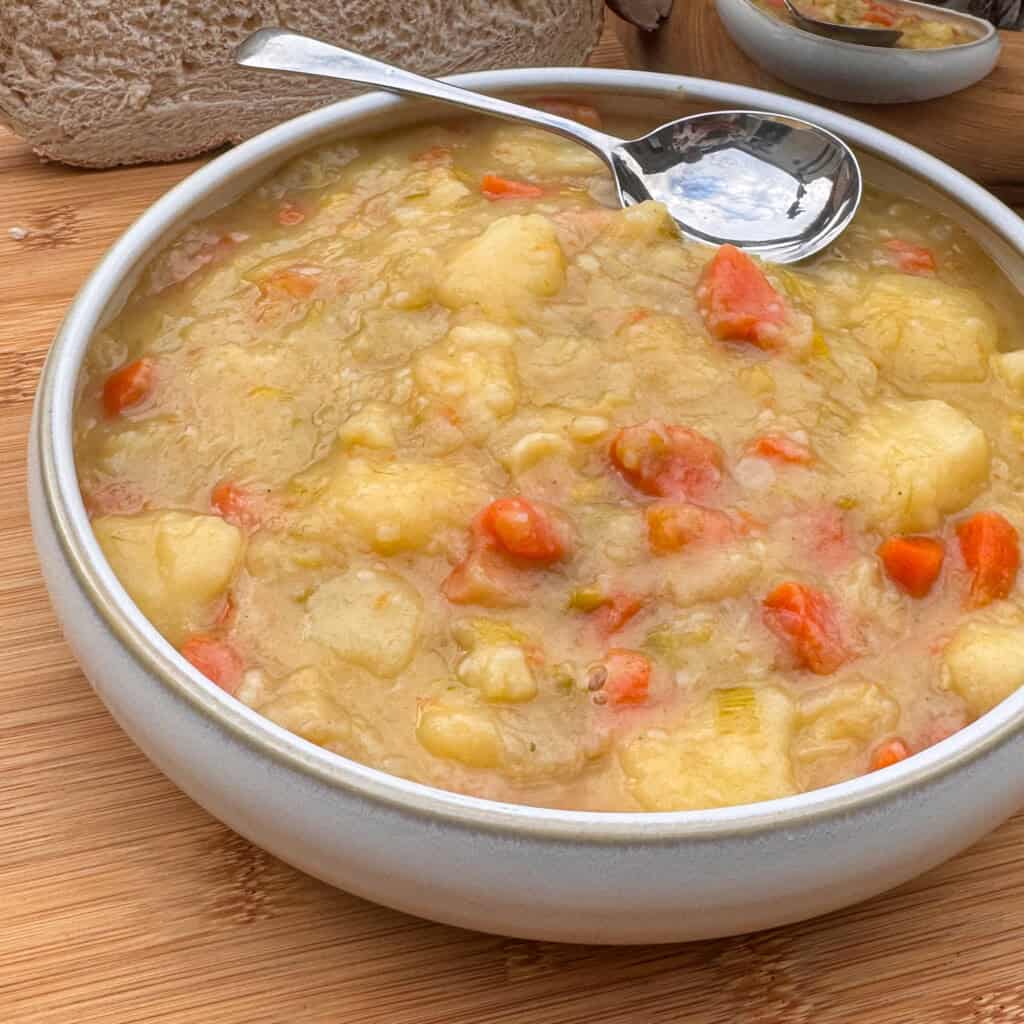
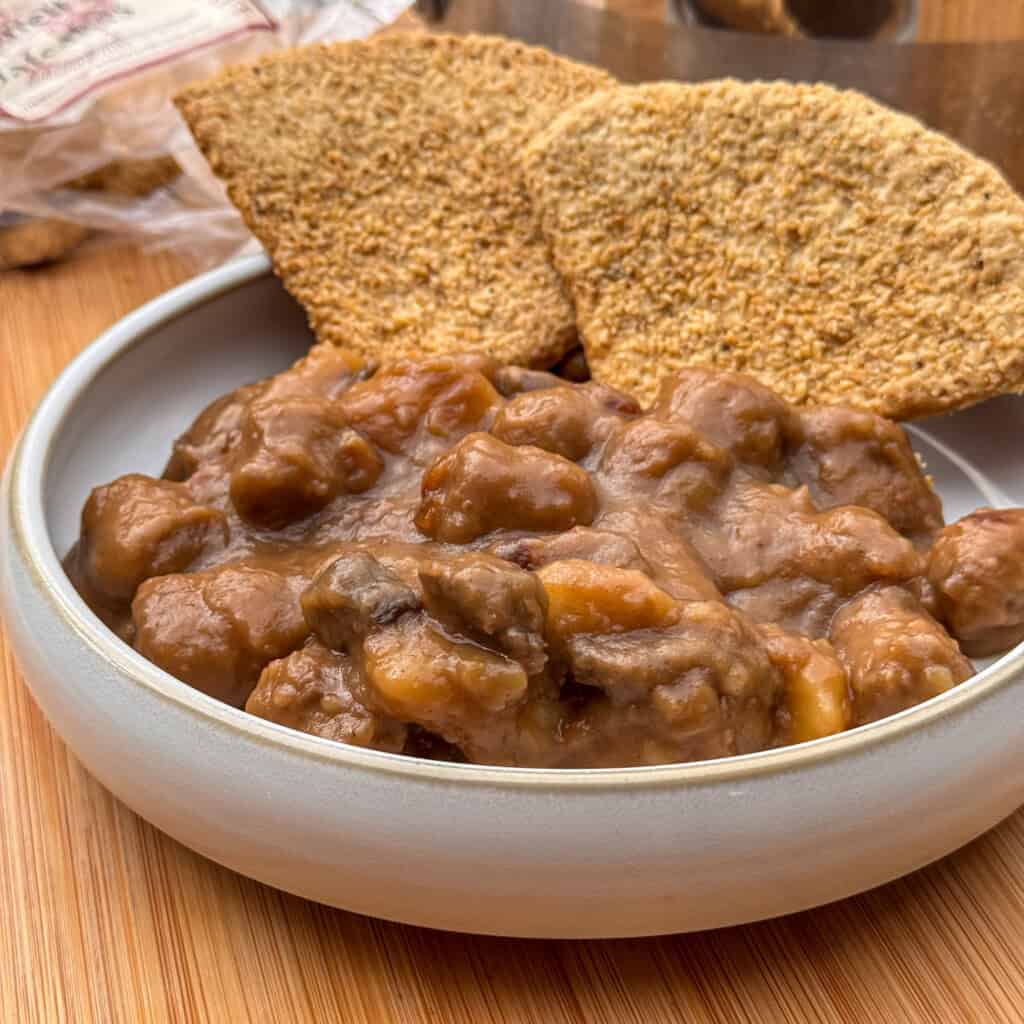
If you liked this Clapshot recipe then you might enjoy some of my other Scottish recipes:

If you have any questions please leave a comment and I'll get back to you. Or I would really appreciate it if you left me a review below.
CRAVING MORE? Subscribe to my newsletter and follow along on Instagram, Tik Tok and YouTube for the latest updates.
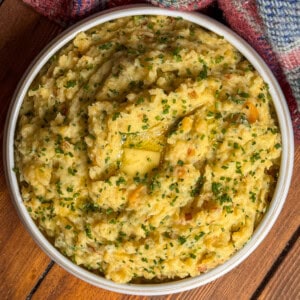
Traditional Scottish Clapshot (Potato and Rutabaga Mash)

Equipment
- 1 Large Pot
- 1 Potato Masher
- 1 Ramekin
- 1 Sharp Knife
Ingredients
- 2 tablespoon beef dripping
- 1 onion optional - See Notes
- 750 g turnip/swede/rutabaga unpeeled weight, peeled weight approx. 520g - See Notes
- 1 kg potatoes unpeeled weight, peeled weight approx. 850g - See Notes
- 80 g salted butter 3oz + extra for serving
- salt and white pepper
- 6 tablespoon chives approx. 10g finely chopped + extra for garnish/serving
Instructions
- Melt 2 tablespoon beef dripping in a large pot (you can skip this and the next step if not using onion - See Notes)
- Peel and finely chop 1 onion - soften in beef dripping for 5-10 minutes until they start to turn golden
- Peel and chop 750 g turnip/swede/rutabaga and 1 kg potatoes into chunks - See Notes
- Remove beef dripping and onion from the pot into a separate ramekin (this will be added back in later)
- Add chopped potatoes into large pot with a generous helping of salt and white pepper and fill with cold water
- Bring to the boil (5 minutes), and cook until knife tender (approx. 20 minutes - but this will vary dependant on how big you’ve chopped your vegetables)
- Drain the vegetables and add 80 g salted butter and mash until combined
- Stir through cooked onions and beef dripping then season with salt and white pepper to taste
- Garnish with extra butter and 6 tablespoon chives freshly chopped to serve
Notes
- Onion is optional. You can skip melting the beef dripping and cooking onion as it's an optional extra. However, you can still opt to add melted beef dripping through the Clapshot when adding the butter, as it's a traditional addition.
- Use red potatoes. They are the best option for mashed potato - through trial and error I have determined they are the superior choice for any mash based dishes due to texture and taste.
- Cut the swede smaller than the potatoes. Swede takes longer to cook than potatoes, so cutting it into slightly smaller chunks helps everything soften at the same rate.
- Start with cold, salted water. Always add your potatoes and swede to cold water. Then bring it to a boil. This ensures even cooking and better texture. Something my Gran always taught me: “vegetables that grow in the ground start off in cold water and veg that grows above the ground start off in boiling water”.
- Avoid overcooking. Boil the veg just until it’s fork-tender. Overcooking can make the mash watery and affect the final texture.
- Warm the butter. Using softened or slightly warmed butter helps it melt evenly into the mash, giving you a smoother, creamier result. But also speeds up the process if your potatoes and swede have already cooled slightly. Don’t overmix. Mash your clapshot just until the ingredients are combined. Overworking the potatoes can make them gluey instead of light and fluffy.
- Variations. You can also add spring onion (green onions) or other cooked green veg (cabbage, kale etc.) through it as well if you wanted.
Leave a Reply