
Below I'll share the secrets to "How To Cook Steak" exactly how you want it, with the tastiest crust and ultimate banging' flavour! My method can be achieved by a novice cook at home with perfect results every single time.
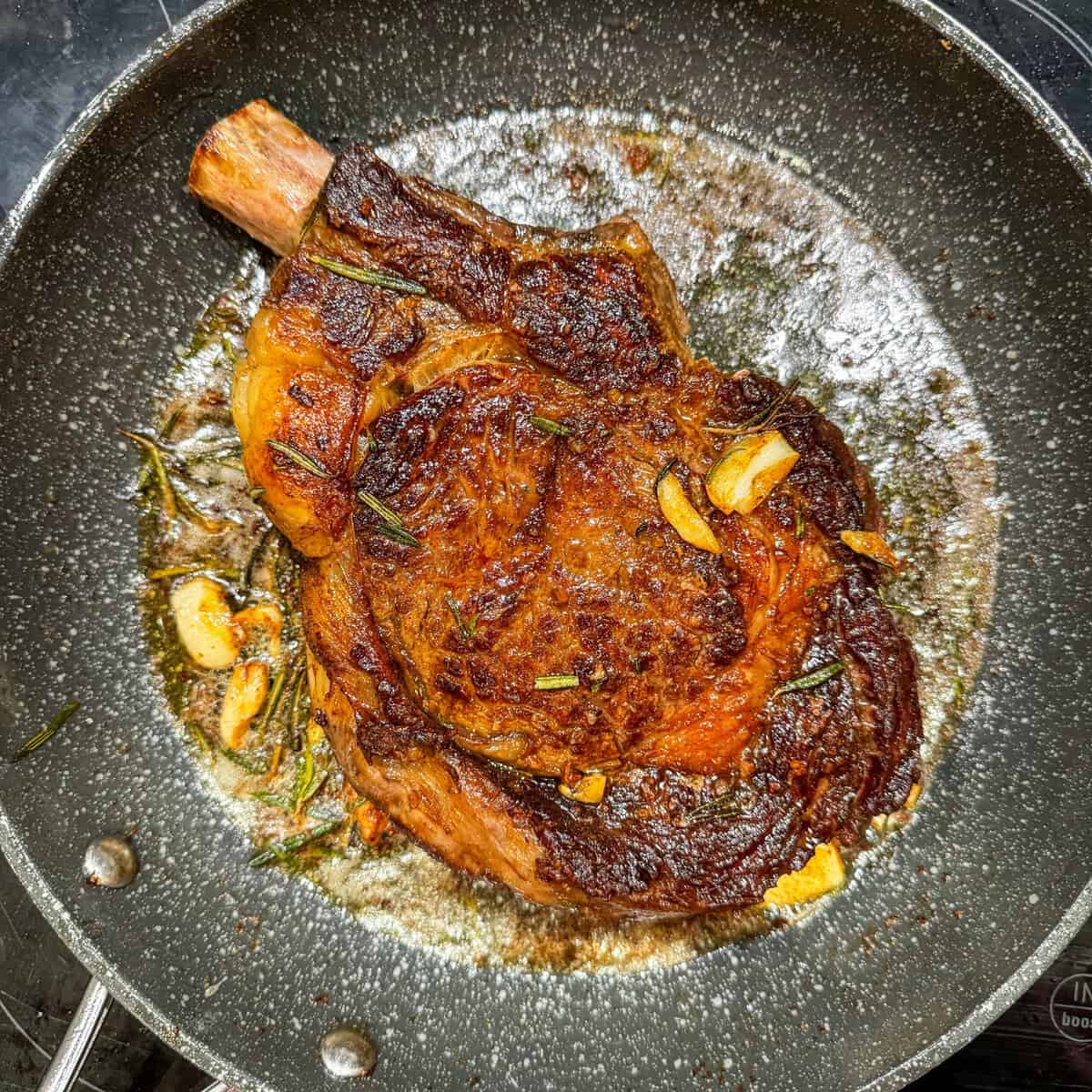
There are a multitude of different ways on 'how to cook steak', but I'm going to teach you mine. I have 6 rules that I adhere to, with a few optional extras, that guarantee the perfect steak every time.
Jump to:
- 6 Rules of How To Cook Steak
- How To Cook Steak: Source The Best Quality Meat You Can Afford
- How To Cook Steak: Meat at Room Temperature
- How To Cook Steak: Dry The Outside Of The Meat
- How To Cook Steak: Oil The Meat, Not The Pan.
- How To Cook Steak: Use a Meat Thermometer!
- Rest Your Meat!
- FAQs
- How To Cook Steak
6 Rules of How To Cook Steak
- Source the best quality meat you can buy (and afford).
- Bring Meat To Room Temperature
- Remove Moisture Before Cooking (e.g. pat with kitchen paper, which is absolutely essential if buying steak from the supermarket versus if buying dry-aged from the butcher it's not as important) - I'll explain the difference below.
- Oil the meat, not the pan!
- Use a Meat Thermometer (I use this one from Amazon; cheap but effective)
- Rest your meat after it's cooked!
I'll expand on each one within this post and why it's important.
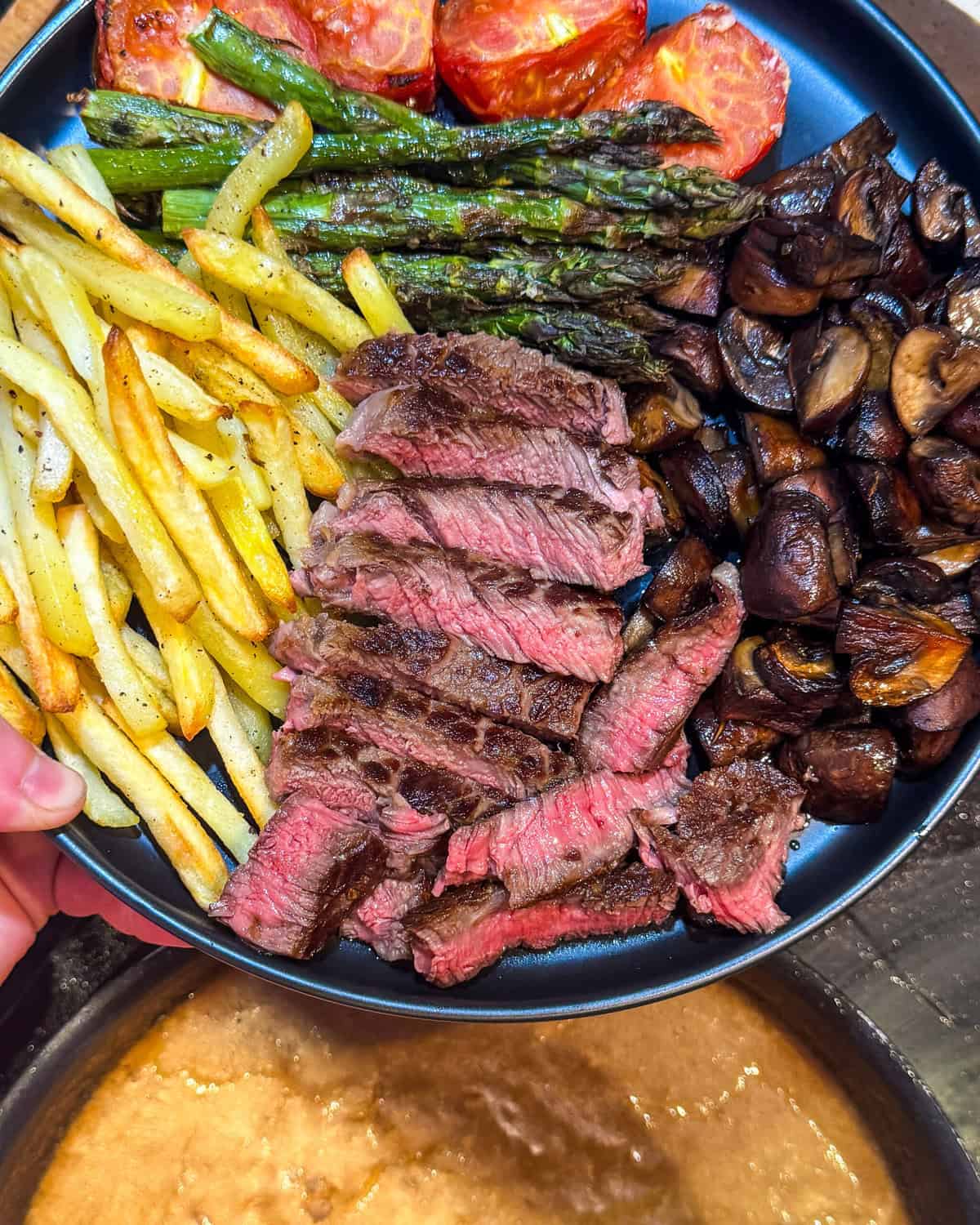
How To Cook Steak: Source The Best Quality Meat You Can Afford
Quality matters. It's why we pay extra for it.
Grass-fed, quality assured beef from a local farm is your best bet.
If you're in Scotland, look for the 'Scotch' label.
Supermarkets also have varying ranges available, so just opt for the best you can afford. This doesn't mean it needs to be a fillet (tenderloin). My favourite cut for cooking steak is a ribeye, which you can see below.
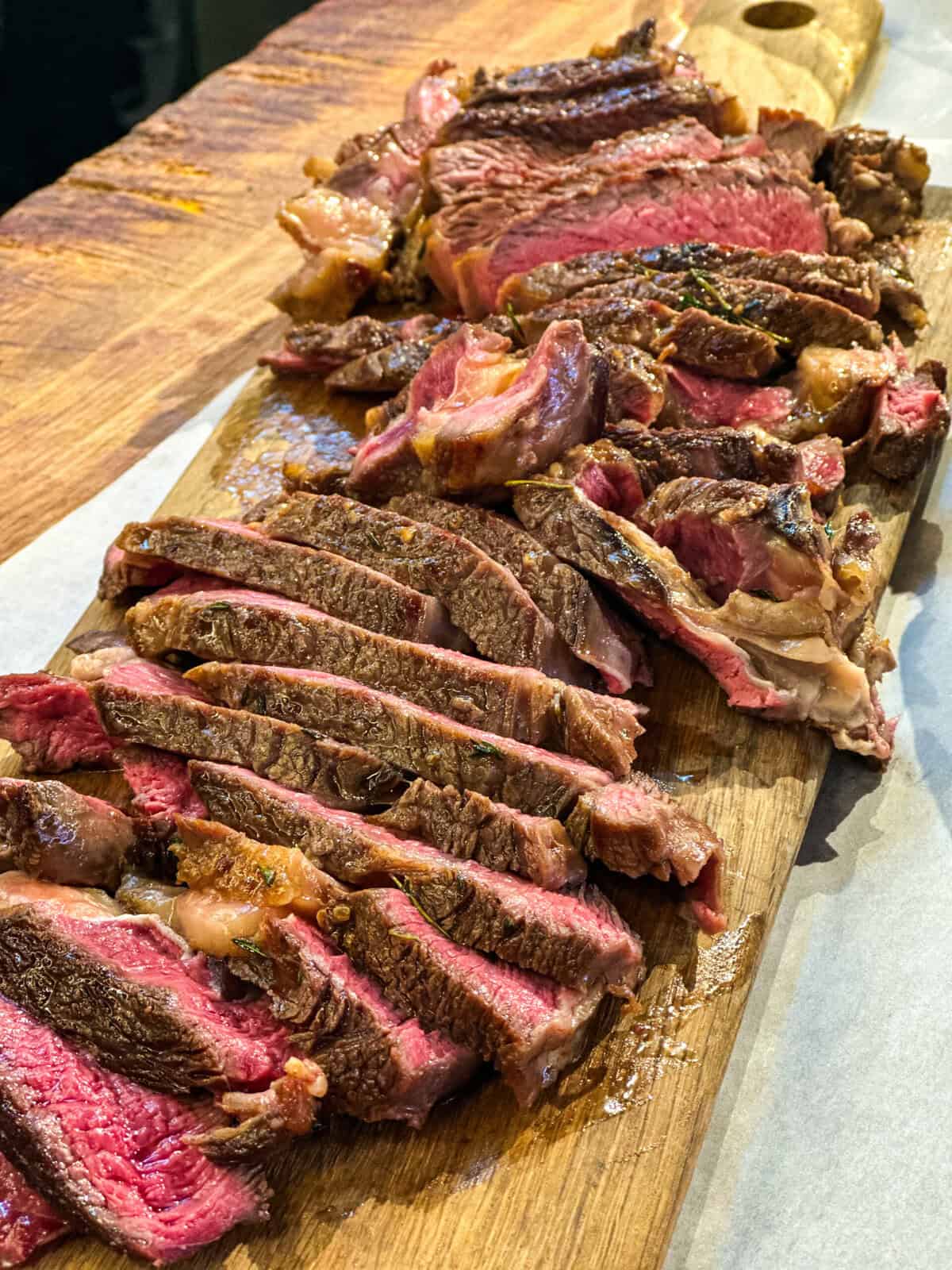
How To Cook Steak: Meat at Room Temperature
You'll see lots of recipes online say to "bring the steak out of the fridge 30 minutes before you plan to cook it".
I'm sorry sir, but dependant on the size of your steak, 30 minutes will make sweet FA difference to the temperature.

I usually encourage you to leave the steak out at room temperature for a few hours before cooking it, if you really want it to come to room temperature.
Otherwise, it is fine to cook it from fridge cold. If anything, it will give you a bit more time to cook it, which could be helpful for a novice cook.
How To Cook Steak: Dry The Outside Of The Meat
Without digging too deep into science... the drier your meat is, the better the crust. This is because the steak will release liquid during the cooking process.
Personally, I opt for dry-aged meat from my local butcher as it's been optimally dried out for me, whilst maximising flavour. That's a photo of me in their dry-ager below.
Supermarket steaks are typically 'aged' but not 'dried' so they will release more liquid during cooking. Hence it's essential, you pat them with kitchen paper first.
You could dry brine your supermarket steak (with 2% weight volume of salt) and leave it in an airtight container in the fridge overnight to draw out some more moisture. This will improve crust results when cooking.

How To Cook Steak: Oil The Meat, Not The Pan.
Simple, yet effective.
This prevents burning (of the steak or the oil), ensures uniform heat transfer across the surface of the meat and results in an overall better sear (crust).
And because I salt my steak before cooking, the oil helps it stick better to the steak's surface. And salt = flavour enhancer.

How To Cook Steak: Use a Meat Thermometer!
As you get more confidence cooking steak, you'll be able to gauge your steak better with 'feel' alone. But in the meantime, and even to ensure ongoing accuracy - use a Meat Thermometer.
Lift the steak and inject the thermometer probe into the middle of the steak from the the side. Check this multiple times to get an average reading.
Temperatures you're aiming for based on how you like your steak cooked are below:
Fahrenheit
- Rare 120-130 °F
- Medium-rare 130-135 °F
- Medium 135-145 °F
- Medium-well 145-155 °F
- Well-done 155-165 °F
Celsius
- Rare 60°C
- Medium rare 60–65°C
- Medium 65–70°C
- Medium well done 70°C
- Well done 75°C

Rest Your Meat!
And the final lesson in How To Cook Steak: Why Rest Meat After Cooking?
It allows the steak juices to redistribute and settle, resulting in a juicier, tastiest final product.
Your steak will also continue cooking after you remove it from the pan, so it allows this process to happen without being disturbed.
If you need it to continue cooking a bit more, cover it in foil (as this will increase the temperature). Otherwise, leave it uncovered.

Once you've mastered this technique, feel free to go a deep dive into reverse searing, using a BBQ or any other manners of cooking your steak. You can also start adding aromatics like rosemary or thyme, with butter and garlic to finish it off. But for now, let's master the basics of how to cook steak.
FAQs
Not really, 30 minutes out of the fridge makes barely any difference. It's fine to cook it fridge cold, it'll just need slightly longer in the pan.
It stops the oil or steak burning, helps the salt stick, and gives a more even sear across the whole surface.
It's not essential once you're confident, but it takes the guesswork out and guarantees the result you want every time.
My method is simple, easy and why I can confidently have awesome Steak Nights at home, served with any of my delicious steak sauces:
If you try my method and it transforms your steak game at home, let me know by leaving a comment or review below.

How To Cook Steak

Equipment
Ingredients
- 1 steak cut of choice (sirloin, ribeye, fillet etc.)
- olive oil
- sea salt
Instructions
- Allow 1 steak to come to room temperature before cooking
- Pat off excess moisture with kitchen paper
- Oil the meat, not the pan. And season with sea salt only (not pepper - as black peppercorns can burn with the high heat point during cooking)
- Heat griddle pan (ideally) or frying pan up to a high heat - you want the pan to be HOT 🔥 when the steak hits it
- For medium/rare - cook the steak for approx. 3 mins per side
- NOTE: Times are approximate based on thickness of steak, heat of pan, heat transference etc. it’s why the next tip is most important…
- Use a meat thermometer to check the internal temperature (see guideline temperatures below)
- ALWAYS rest your steak before serving
Notes
- Rare 120-130 °F
- Medium-rare 130-135 °F
- Medium 135-145 °F
- Medium-well 145-155 °F
- Well-done 155-165 °F
- Rare 60°C
- Medium rare 60–65°C
- Medium 65–70°C
- Medium well done 70°C
- Well done 75°C

Cassie Watson says
Excellent advice and a fool-proof way to cook steaks to perfection. Thanks.