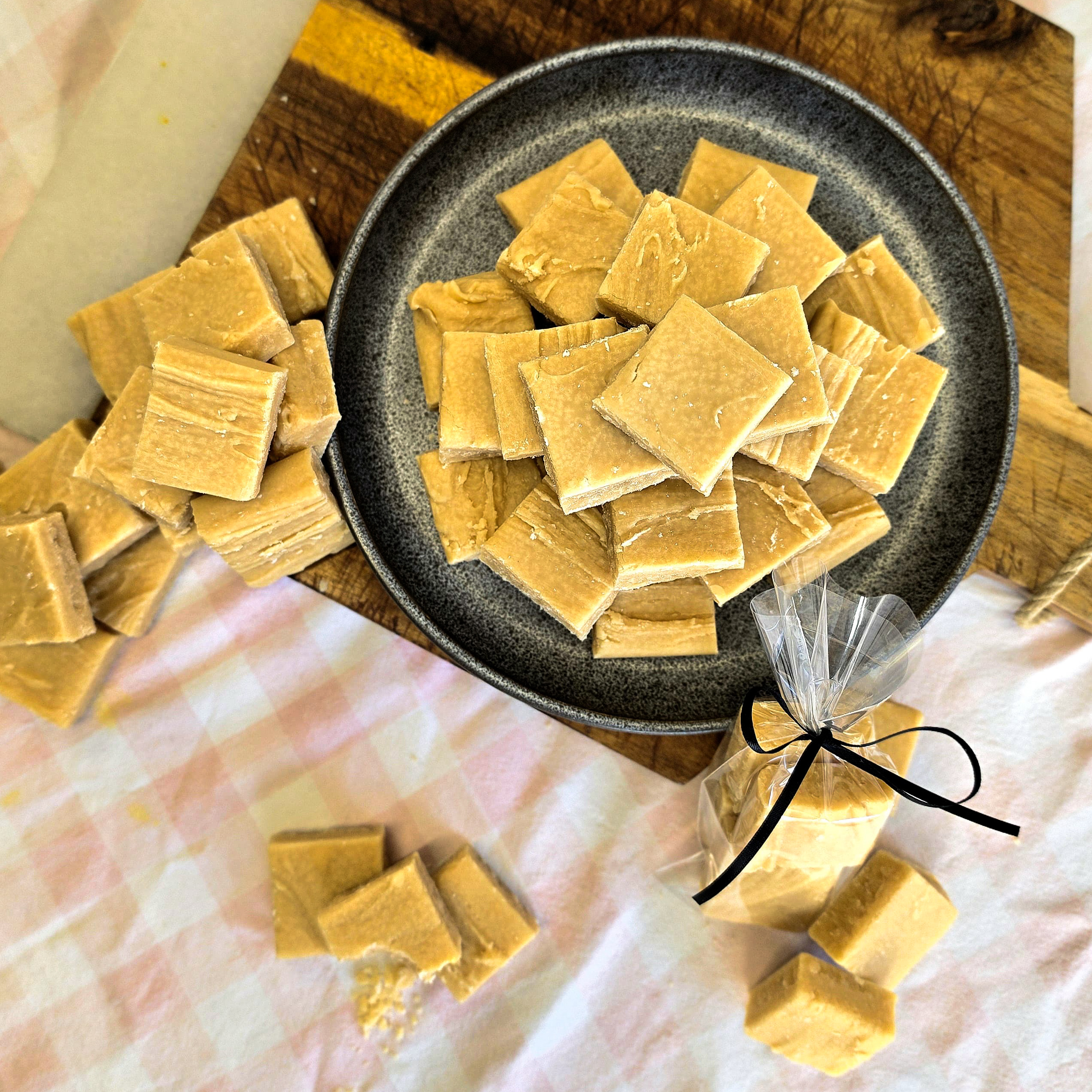
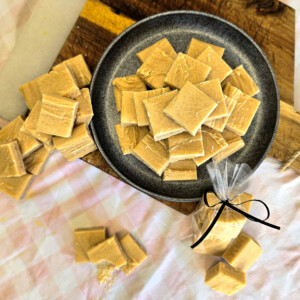
This traditional Scottish Tablet recipe is made with just four simple ingredients: sugar, butter, condensed milk and whole milk. Sweet, buttery and deliciously crumbly, it has that unmistakable melt-in-the-mouth texture that sets proper Scottish tablet apart from fudge.
If you've been put off making homemade tablet because you've heard it's difficult to get right, don't be. The ingredients couldn't be simpler - the secret is in the method. A thermometer takes away the guesswork, while constant stirring followed by whisking at exactly the right point gives you that classic golden colour and crumbly texture.
Jump to:
- What is Scottish Tablet?
- Why You'll Love This Scottish Tablet Recipe
- What Makes My Scottish Tablet Recipe Different?
- Ingredients & Notes
- How to make Scottish Tablet
- My Top Tips for Perfect Scottish Tablet
- FAQs for Scottish Tablet
- How to Store Scottish Tablet
- Other Scottish Recipes You'll Love
- Scottish Tablet
My Gran's recipe for tablet has been passed down many generations. And although small tweaks have been made for each new person who makes it, it manages to create the same memories for each person who eats it. It's regularly served across Scotland with tea or coffee in cafes and restaurants, but getting the perfect texture is the tricky part. And not everyone manages it.
But I can guarantee, with this recipe, you will.
What is Scottish Tablet?
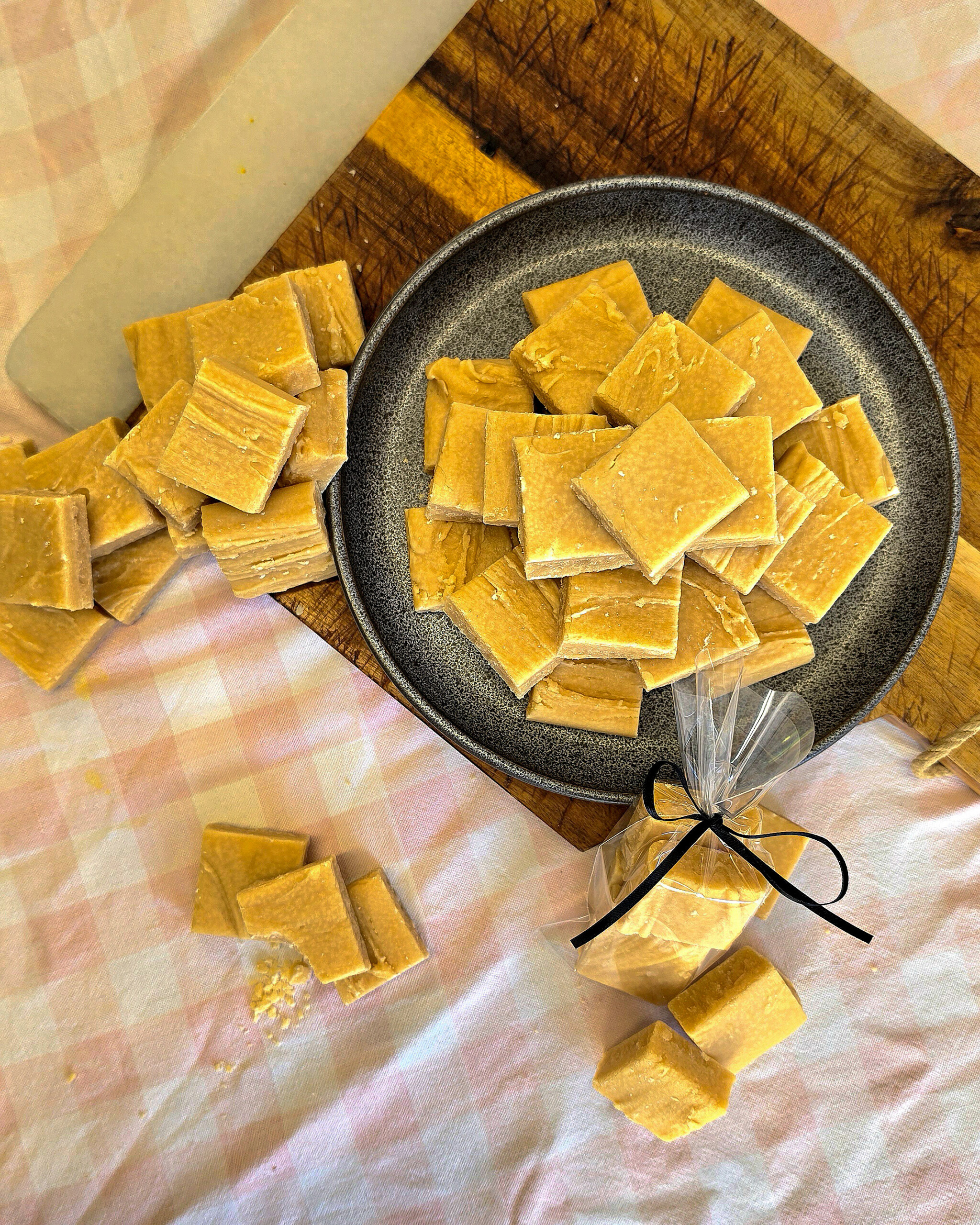
Scottish tablet is a traditional Scottish sweet made predominantly from sugar, butter and milk. It has a rich, buttery, caramelised flavour and a firm, slightly crumbly texture that melts in your mouth.
And despite the two often being compared, Scottish tablet isn't the same as fudge.
Fudge tends to be softer, smoother and creamier, whereas tablet has a firmer, more brittle texture with a characteristic slight grain to it. That distinctive texture comes from both the temperature the sugar mixture reaches and what happens afterwards when the hot mixture is beaten.
Why You'll Love This Scottish Tablet Recipe
- Only four ingredients – caster sugar, salted butter, condensed milk and whole milk.
- No guessing when it's ready – I use a thermometer and cook the mixture to 120°C (250°F).
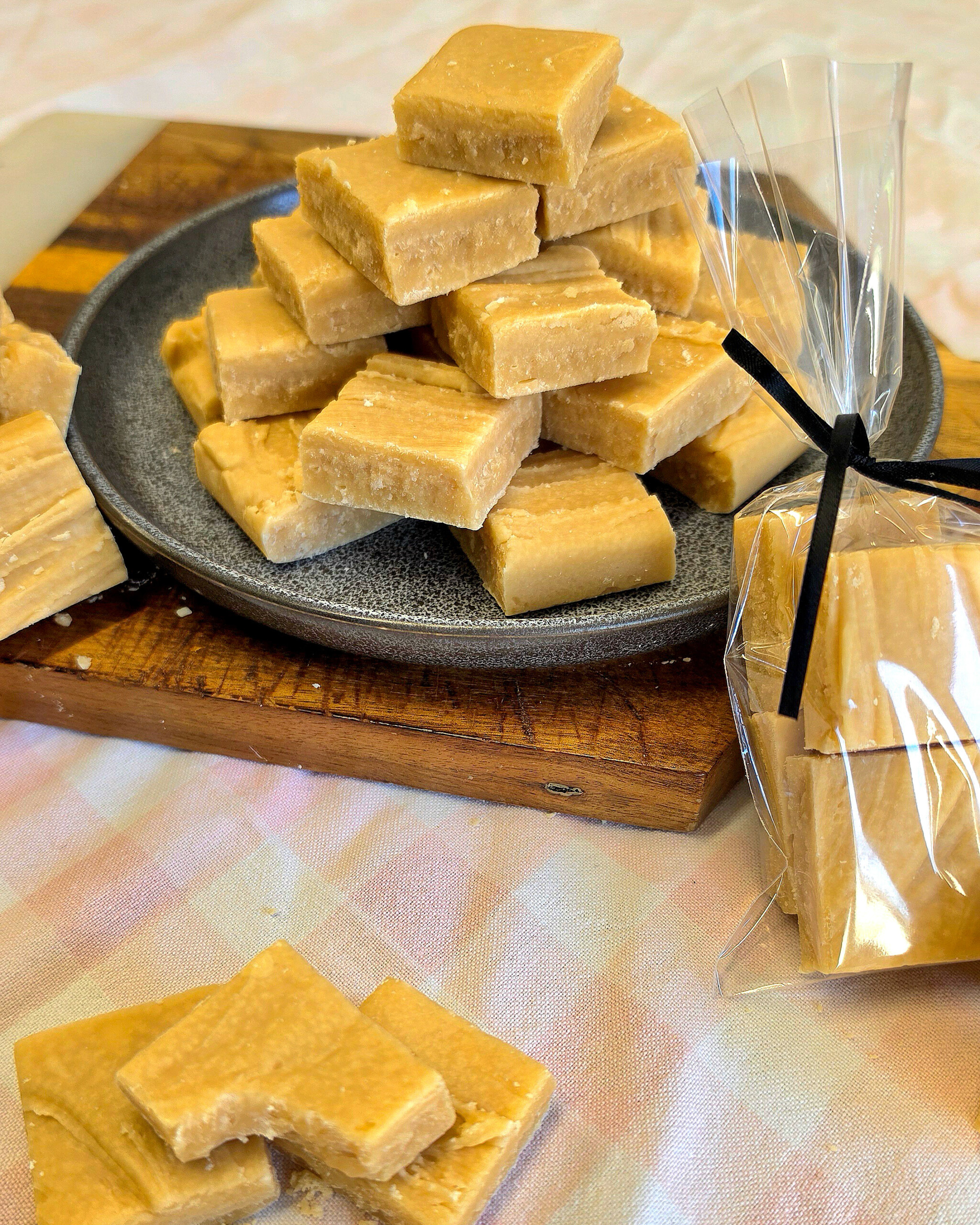
- Traditional texture – firm and crumbly with that classic melt-in-the-mouth finish.
- Easy to portion – one batch makes 48 small pieces, so there's plenty for sharing.
- Perfect for gifting – ideal at Christmas, Hogmanay or whenever you want a traditional Scottish sweet treat.
What Makes My Scottish Tablet Recipe Different?
If you've ever been given a tablet recipe that tells you to boil it for a certain number of minutes or simply wait until it "looks ready", you'll know how difficult that can be to judge.
I don't rely on either.
I cook my tablet until the mixture reaches exactly 120°C (250°F) on a thermometer. As soon as it hits temperature, it comes straight off the heat and I begin whisking.
The second important indicator is what happens in the pan. As you whisk, you'll see the mixture thicken and deepen in colour. Once it begins sticking to the sides of the pan, it's ready to pour.
Those two visual markers - 120°C followed by the change in consistency while whisking - make the process much easier to judge.
Ingredients & Notes
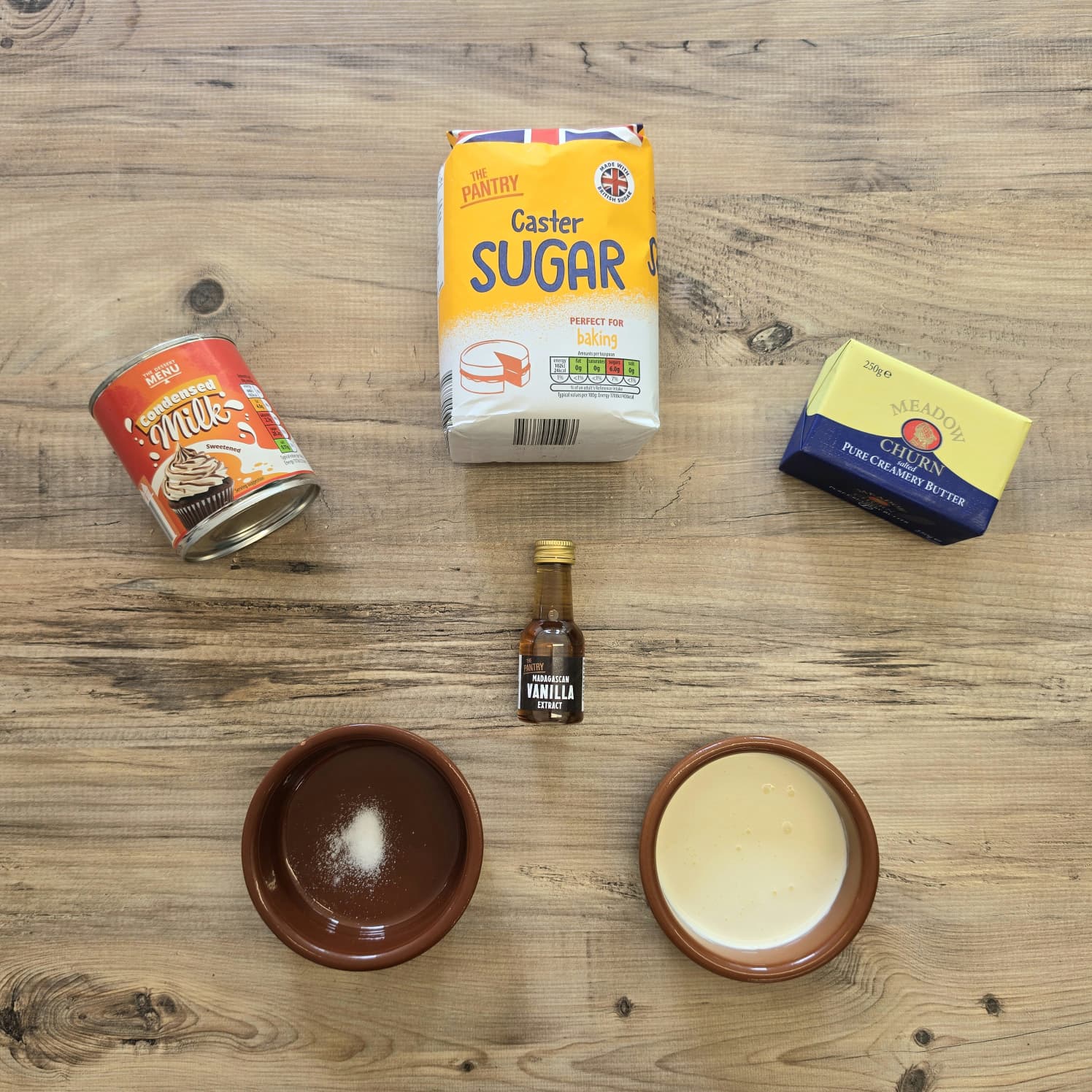
- Caster Sugar: You'll need caster sugar for this recipe. Its finer crystals dissolve readily into the milk mixture and form the main structure of the finished tablet.
This isn't a recipe where I'd recommend reducing the amount of sugar. Tablet is confectionery and the sugar isn't there purely for sweetness - it's fundamental to how the recipe cooks and sets.
- Condensed Milk: You'll need one standard 397g can of sweetened condensed milk. It adds richness and that distinctive creamy, caramelised flavour.
Make sure you're using condensed milk rather than evaporated milk - they're very different products and aren't interchangeable here.
- Whole Milk: Use whole milk rather than a lower-fat alternative. It gives the tablet the richness I'm looking for and, importantly, it's what I've tested this recipe with.
- Salted Butter: I use salted because that little bit of salt balances the intense sweetness of the tablet without the need to add any additional salt.
Optional Ingredients
- Vanilla Extract: this adds a nice optional flavouring to the tablet that doesn't detract from the traditional taste.
- Salt: I personally find tablet really sweet, so the addition of a little extra salt is to my preference. You could make it without initially to gauge your own taste preference then add the next time if needed.
How to make Scottish Tablet
Prepare: Line a 9 x 12-inch baking tin with baking paper. Have your thermometer, whisk and spatula beside the hob ready to go.
Combine: Add the sugar, butter, condensed milk and whole milk to a large saucepan. Plus the additional salt and vanilla extract if using.
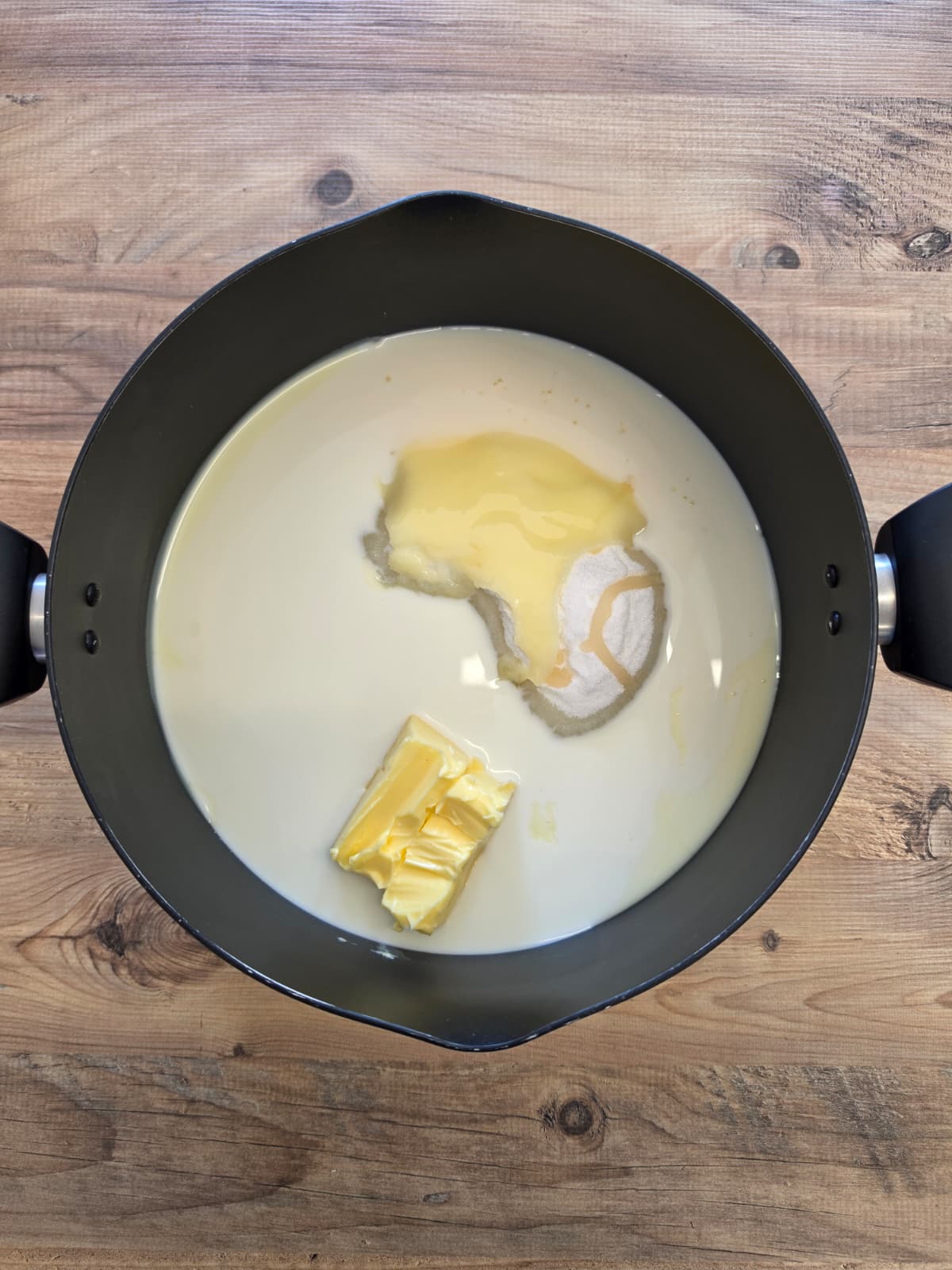
Boil: Place the pan over a high heat and bring the mixture to the boil, stirring constantly.
Once boiling, reduce the heat to medium-high and continue cooking and stirring. Don't leave the pan unattended - the mixture can catch and burn.
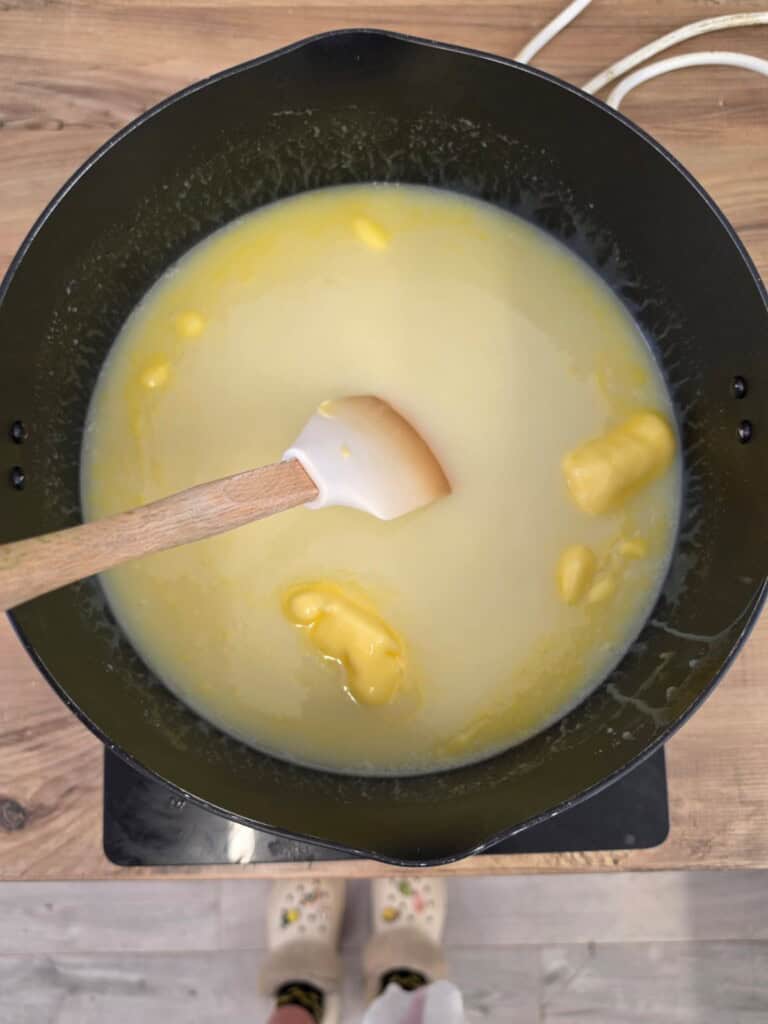
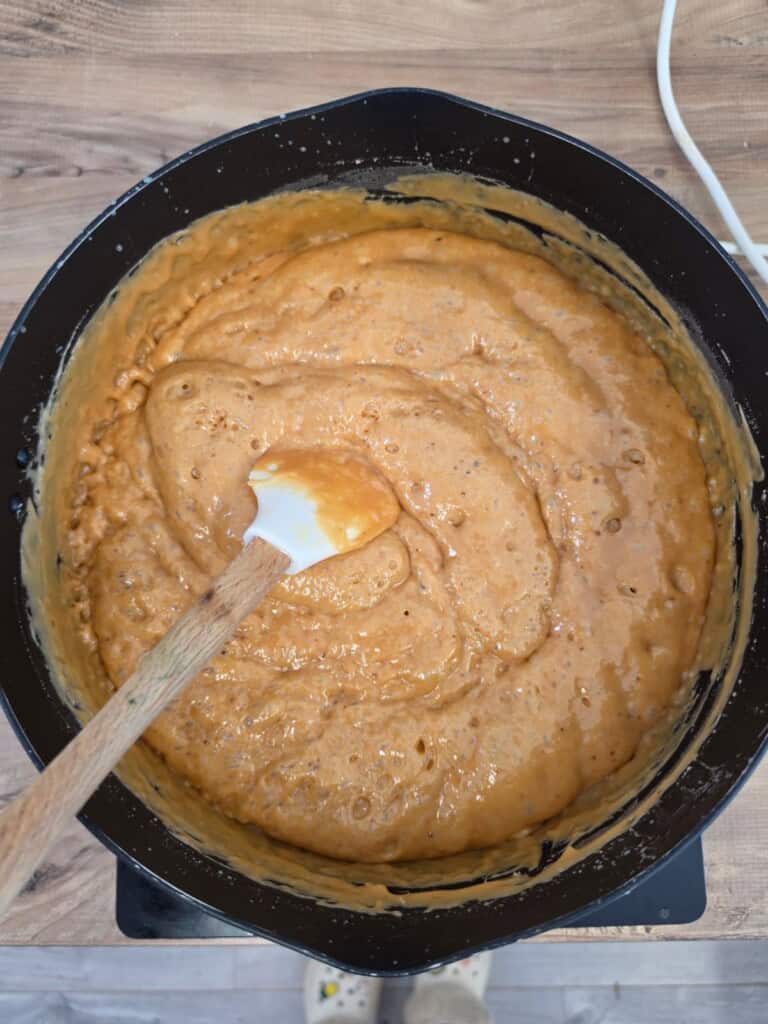
Reach 120C: Continue cooking until the tablet mixture reaches 120°C (250°F) on your thermometer.
As soon as it reaches temperature, remove the pan from the heat.
Whisk: Immediately begin whisking the mixture in the pan.
Keep whisking and you'll notice the tablet starting to thicken and deepen in colour. When the mixture begins sticking to the sides of the pan, it's ready.
Pour: Quickly pour the tablet into your prepared tin and use your spatula to spread it out towards the edges.
You'll need to work fairly quickly at this stage because once the tablet reaches the right consistency it will begin to set.
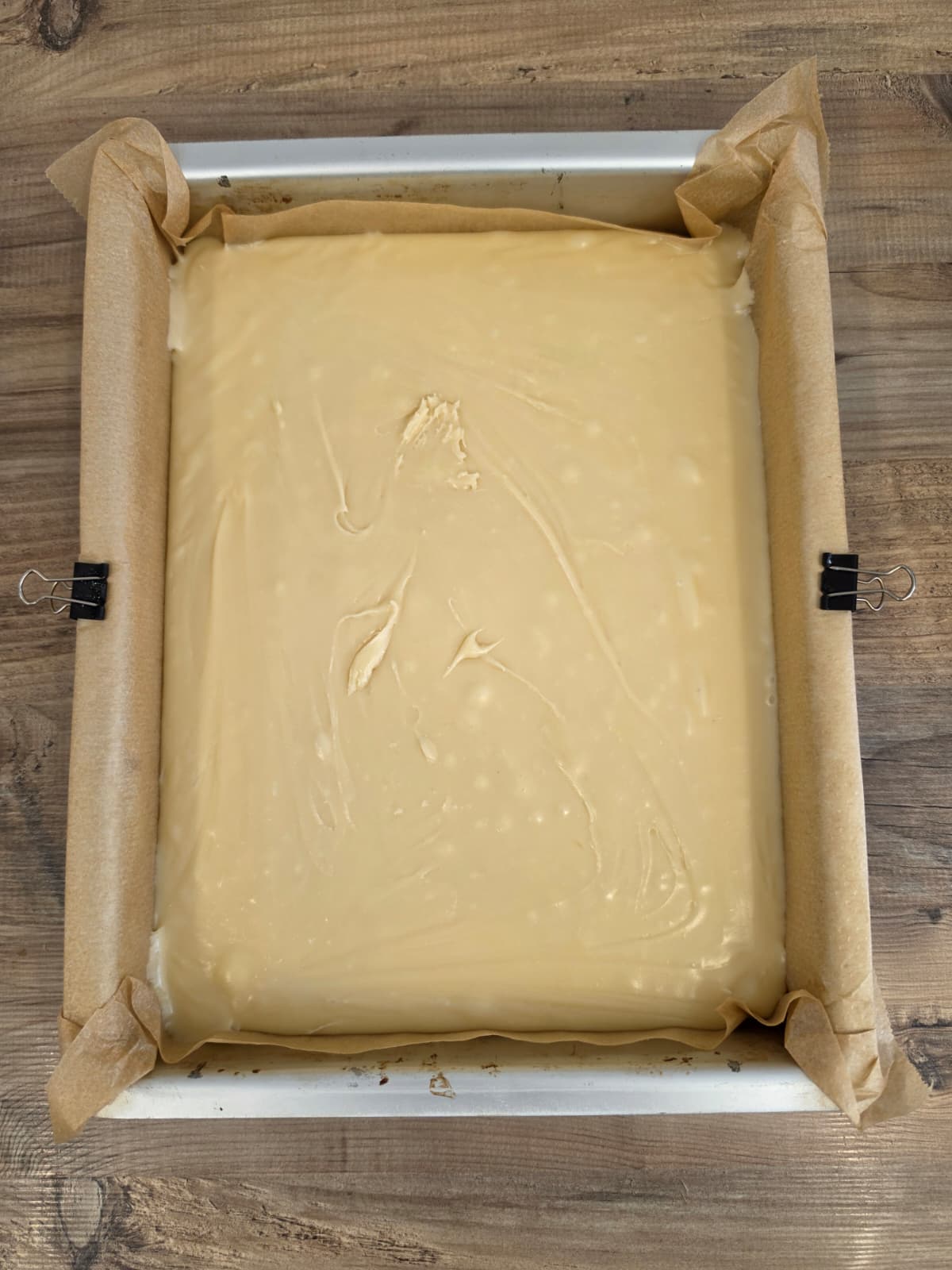
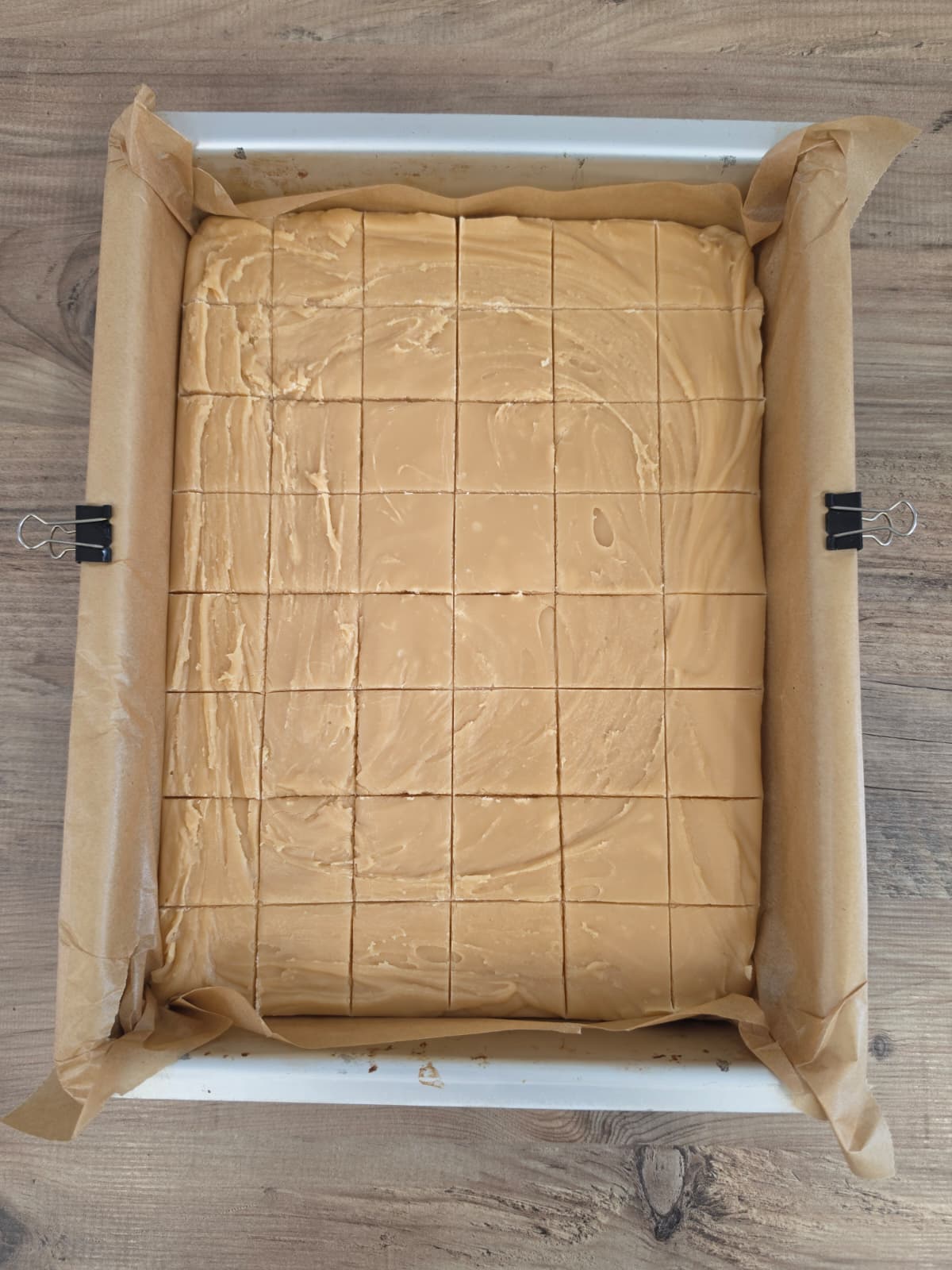
Score + Set: Score the tablet into 48 pieces while it's still warm.
Then leave it completely alone to cool and set for at least 6 hours, although I much prefer leaving it overnight.
Once completely cool, break it into pieces along the scored lines and enjoy.
My Top Tips for Perfect Scottish Tablet
- Get organised before you start. This is not the recipe for weighing an ingredient while something else bubbles away on the hob. Line the tin and have your thermometer, whisk and spatula ready before you begin.
- Don't stop stirring. Once the pan is on the heat, keep stirring. The high sugar and dairy content means the mixture can catch on the bottom of the pan very easily.
- Use a thermometer. This is my biggest tip. Rather than relying on how long the tablet has been boiling or trying to decide whether the colour looks right, take it to 120°C.
- Take it off the heat immediately. Once you see 120°C, don't give it "another minute for luck". Remove it from the heat and start whisking.
- Keep whisking. Don't panic that the mixture isn't setting while you're whisking it. You're looking for it to become thicker and darker and begin sticking to the sides of the pan.
- Work quickly once it's ready. When the tablet reaches the correct consistency, get it into your lined tin and spread it out. It will start setting quickly.
- Leave it alone once it's in the tin. Tablet retains an incredible amount of heat. Don't be tempted to touch or handle it while it's setting, and remember that the saucepan itself will remain extremely hot too.
FAQs for Scottish Tablet
This section is pretty lengthy, but worthwhile in my opinion, as even although it's a relatively low ingredient recipe - the method need to be quite specific to achieve the outcome you're looking for.
There are two stages I look for.
The first is temperature. The mixture needs to reach 120°C (250°F) while it's cooking.
The second happens after you've removed it from the heat. As you whisk, the mixture will begin to thicken and change colour. Once it starts sticking to the sides of the saucepan, it's ready to pour.
Don't wait for it to set in the pan — you need to get it into your lined tin while it's still pourable.
If your tablet hasn't set after being left to cool completely, the first thing I'd consider is whether the mixture reached the correct temperature.
That's one of the main reasons I recommend using a thermometer rather than relying on cooking time alone.
The good news is that tablet can sometimes be rescued. If you've poured it into the tin and it isn't setting properly, you can return the mixture to the saucepan and reboil it.
Yes. If your tablet hasn't reached the colour or consistency you're looking for, you can return it to the pan and reboil the mixture.
Just remember that you're dealing with an extremely hot sugar mixture, so transfer and reheat it very carefully.
A slightly grainy, crumbly texture is exactly what you're looking for in Scottish tablet. That's one of the things that differentiates it from soft, creamy fudge.
There is, however, a difference between the characteristic fine grain of tablet and an unpleasantly gritty result.
Make sure the ingredients are thoroughly combined as the mixture heats and follow the temperature and whisking stages carefully.
Tablet needs your undivided attention while it's on the hob.
Sugar, condensed milk and milk can catch very easily, particularly as the mixture becomes hotter and thicker. Keep stirring continuously, making sure you're getting right across the bottom of the saucepan.
If you're making tablet for the first time, I'd read through the entire recipe before you start so you know exactly what happens next at every stage.
Leave the tablet at room temperature for a minimum of 6 hours.
For the best result, I recommend making it the day before you want it and leaving it to set overnight.
Score your portions while the tablet is still warm, then resist the temptation to keep poking at it while it cools.
No. Although they're made from similar ingredients, their finished textures are quite different.
Fudge is generally soft, dense and creamy. Traditional Scottish tablet is firmer and more brittle, with a fine, crumbly texture that melts as you eat it.
If you've only ever eaten fudge before, don't expect homemade tablet to have the same smooth consistency — that slight grain is part of what makes tablet, tablet.
How to Store Scottish Tablet
Once completely cooled and set, store your tablet in an airtight container at room temperature. I like to separate the layers with baking paper to stop the pieces from sticking together.
Stored correctly, it will keep well for around 2–3 weeks. Keep the container somewhere cool and dry, away from direct sunlight or sources of heat, as warmth and moisture can affect the texture.
There's no need to keep tablet in the fridge. In fact, I prefer to store it at room temperature to help maintain that classic firm, crumbly texture.
Can You Freeze Scottish Tablet?
Yes, it can be frozen. Once completely set, place the pieces in an airtight, freezer-safe container, separating the layers with baking paper. Freeze for up to 3 months. It's a great idea to prep in the months leading up to Christmas as it offers a great homemade, thoughtful addition to any gift.
Allow the tablet to defrost at room temperature before eating. Keep it in its container while it comes back to room temperature to help protect it from excess moisture.
Other Scottish Recipes You'll Love
If you love Scottish recipes then you might also be interested in trying:

If you have any questions, please leave a comment, and I'll get back to you. Or I would really appreciate it if you left me a review below.
CRAVING MORE? Subscribe to my newsletter and follow along on Instagram, Tik Tok and YouTube for the latest updates.
Scottish Tablet

Equipment
- 1 large saucepan
- 1 cooking/sugar thermometer
- 1 whisk
- 1 9 x 12-inch baking tin
- 1 heatproof spatula or spoon
- baking paper
Ingredients
- 900 g caster sugar
- 125 g salted butter
- 1 can of condensed milk 397g
- 350 g whole milk
- 1 tsp vanilla extract optional
- ¼ tsp salt optional
Instructions
- Line a 9" x 12" baking pan with baking paper.
- Get a whisk ready - put it next to where the tablet will be cooking. You’ll also need a thermometer and spatula to hand too, as once you start the process you cannot step away from the pan.
- Place all ingredients (900 g caster sugar, 125 g salted butter, 1 can of condensed milk, 350 g whole milk and optional ingredients if using: 1 teaspoon vanilla extract and ¼ teaspoon salt) into a large pan, place on the hob and bring to a boil on a high heat, stirring all the time.
- Once you reach a boil, turn the heat down to medium-high and continue to stir, whilst checking the temperature periodically.
- Keep stirring the mixture until it reaches 120°C (250F), and as soon as it reaches temperature, take it off the heat immediately and start whisking the mixture in the pan.
- Whisk the mixture until it starts to thicken and darken in colour. Once the mixture starts to stick to the sides of the pan, pour it into your lined tin and quickly spread it to the edges.
- Score the mixture into 48 pieces and leave to cool for a minimum of 6 hrs, but ideally overnight.
- Break the tablet into chunks and enjoy.
Leave a Reply